Cookies & privacy
We use essential cookies to run the site and, with your consent, analytics cookies to understand how it's used. You can change your choice anytime.
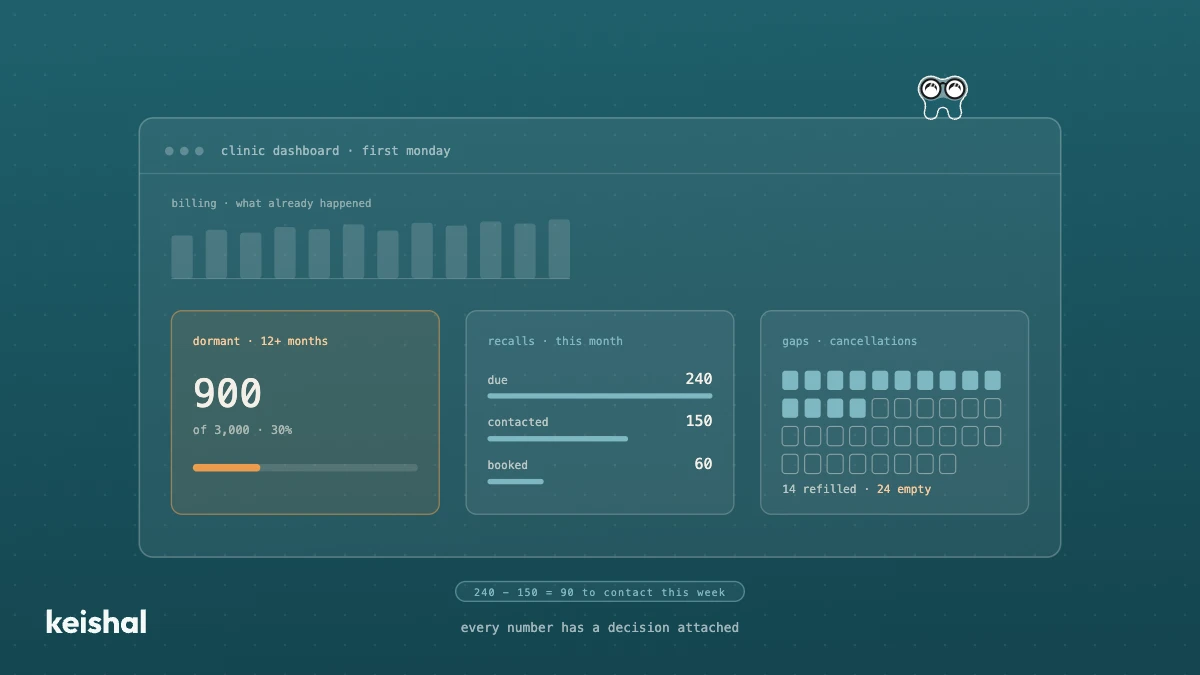
A dental clinic dashboard is useful if it helps you decide something. The one in your practice management software usually shows billing and the schedule, which is the past. What it usually lacks is the patient base: how many haven't been in for over a year (900 of 3,000 = 30%), which recalls fall due this month, which gaps stayed empty and how much of your base you can actually reach. Six questions, each with its number and its decision.
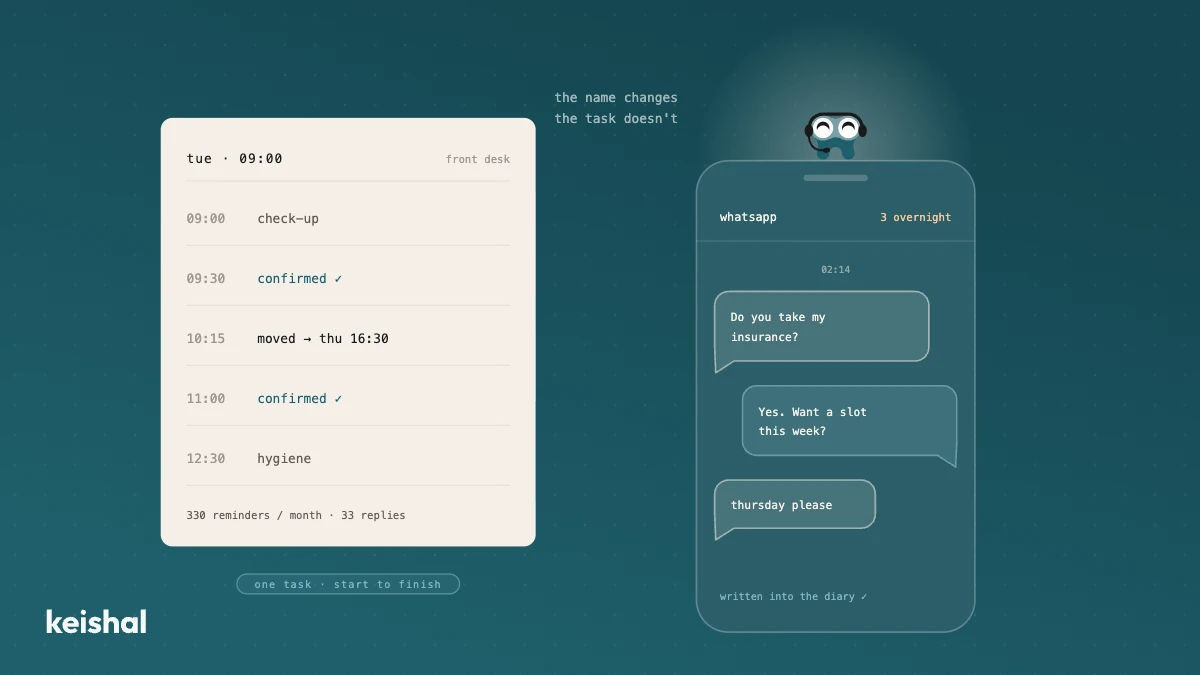
Superintelligence is a hypothetical AI that would outperform people at almost every intellectual task, and it doesn't exist today. The AI dental clinics use is narrow AI: it confirms appointments (15 × 22 = 330 reminders a month), reactivates dormant patients, answers during the 118 hours a week the clinic is closed and flags incomplete records. For a clinic, the name matters less than the specific task the tool gets done in your schedule.
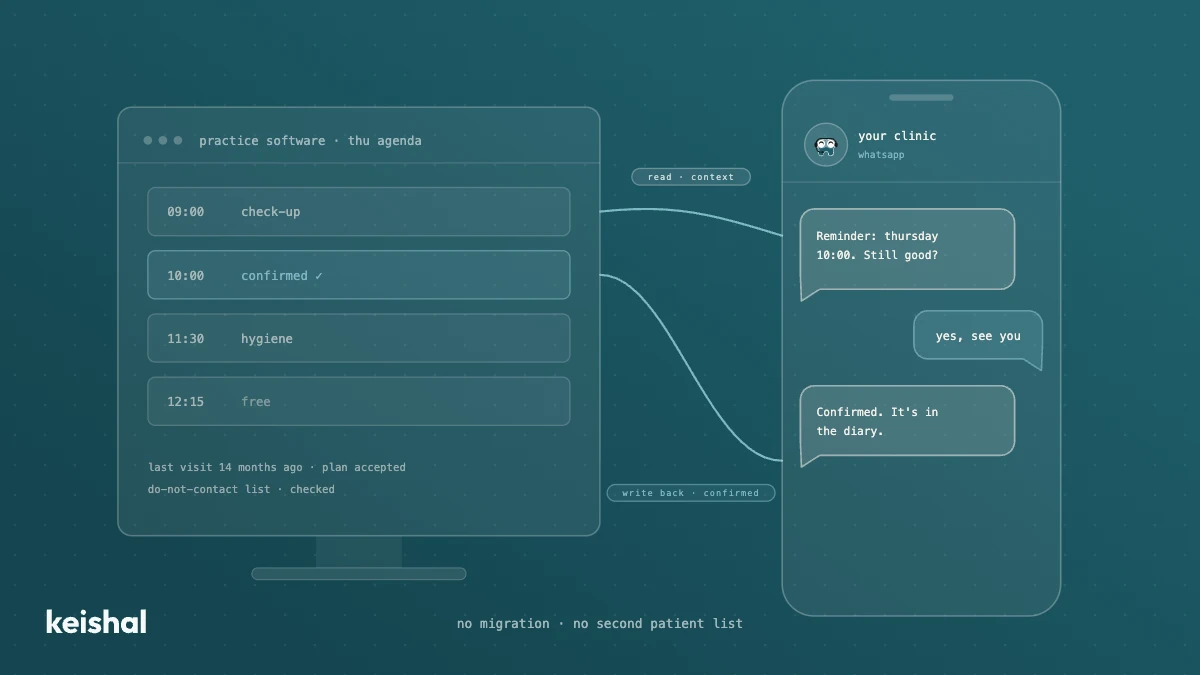
A real integration with your dental clinic's software does two jobs: it reads your patients' data for context and writes appointments, confirmations and status changes back into your program. A monthly CSV, a calendar connector or a read-only tool leaves the rest to your team: with 330 reminders a month, marking each confirmation at 30 seconds adds up to almost 3 hours. Ask for the list of supported programs and versions in writing, and check that there's no migration and no duplicate patient base.
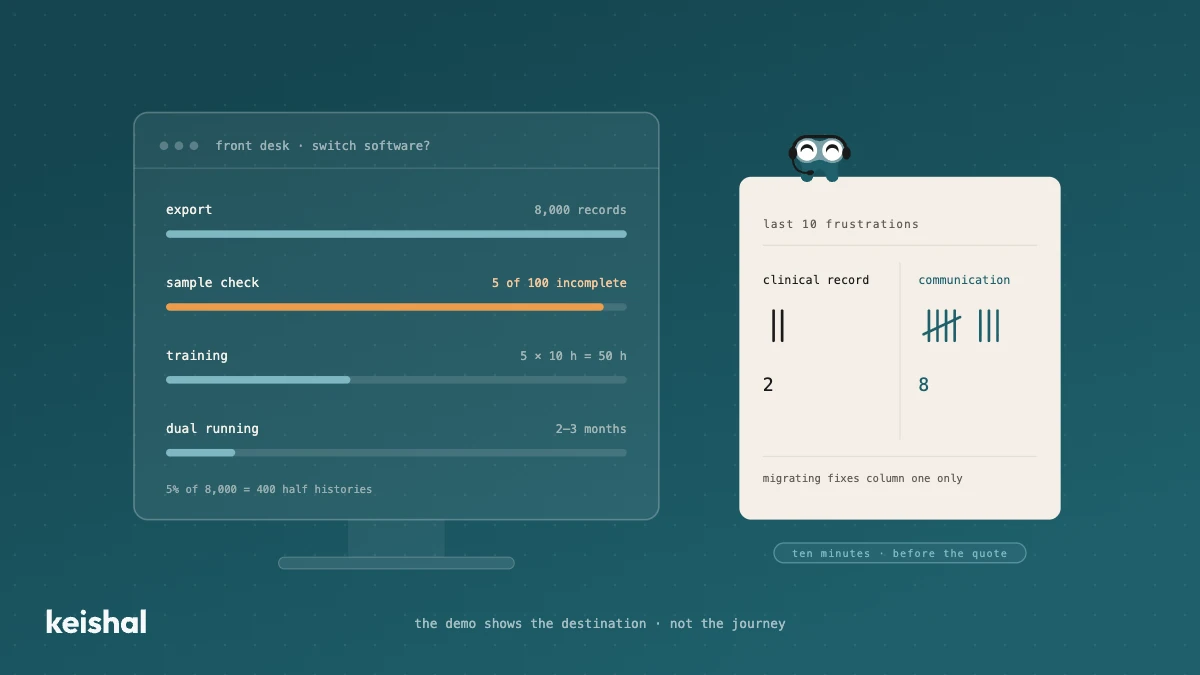
Switching dental software isn't installing a program: it's exporting and verifying thousands of records, training the team (5 people × 10 hours = 50 hours) and running two systems side by side for two or three months. It's worth it when the software has no support, holds your data hostage or the clinic has outgrown it. But if what's pushing you is unmanaged reminders, recall that never happens and out-of-hours messages, that communication layer can be added on top of your current PMS, without migrating anything.
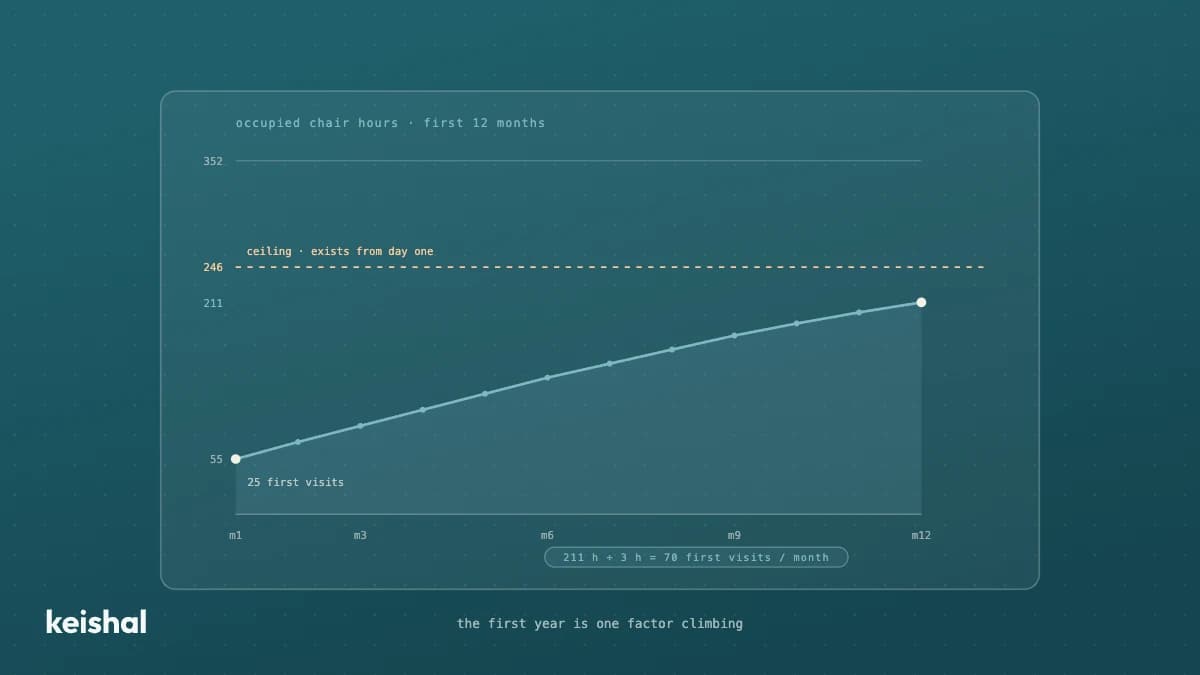
No published first-year average is defensible: they mix clinics, models and cities, and almost never show where the figure comes from. The useful answer is a curve you calculate with your own numbers. Your structural ceiling (chairs × available hours × € per occupied hour) exists from day one; what sits at zero is occupancy. Example: for 60 % occupancy in month 12 with 2 chairs (352 available hours) you need around 211 occupied hours a month; if each new patient generates around 3 chair hours, that is around 70 first visits a month. That division — the hours you want to fill divided by the hours each new patient brings — is your first year, and in 2026 there is still no report that does it for you.
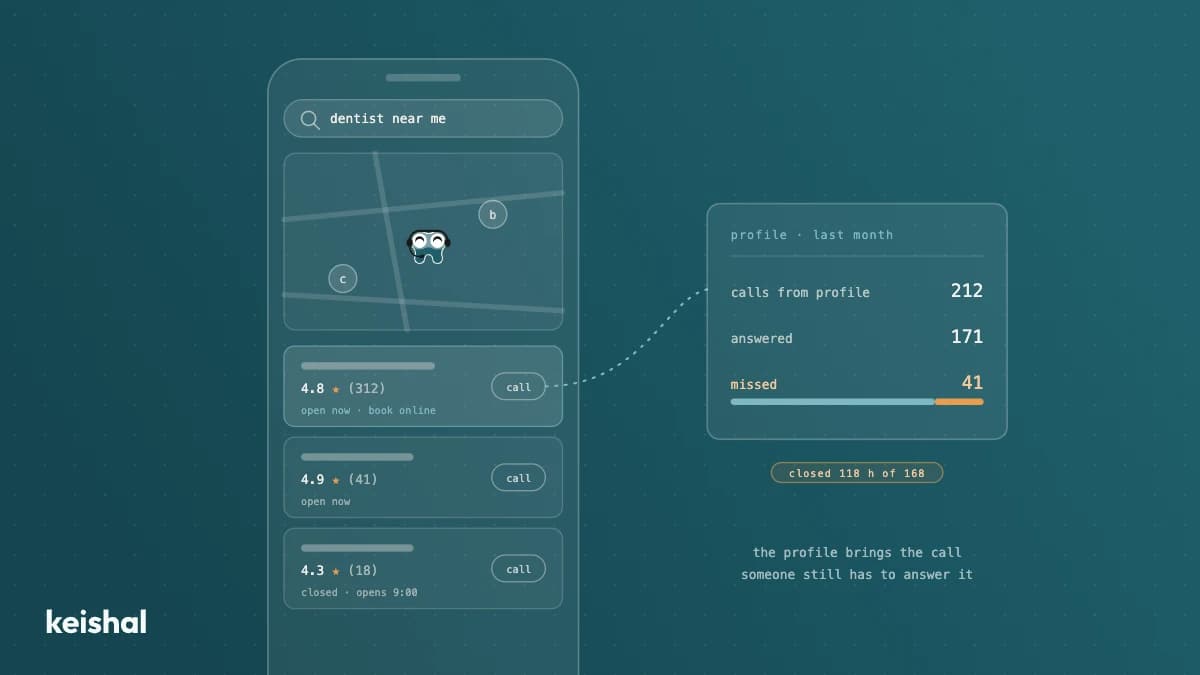
Your Google Business Profile is your dental clinic's real front page: many patients decide and call from there without ever visiting your website. Tuning it up is one afternoon of work and needs no agency: the right category and services, real hours including holidays, your own photos, a booking link and a constant flow of reviews. What the profile won't fix is what happens to the contacts it generates: with 50 open hours out of the week's 168, 118 go uncovered (70%). If the call lands there, the profile has only optimised your volume of missed calls.
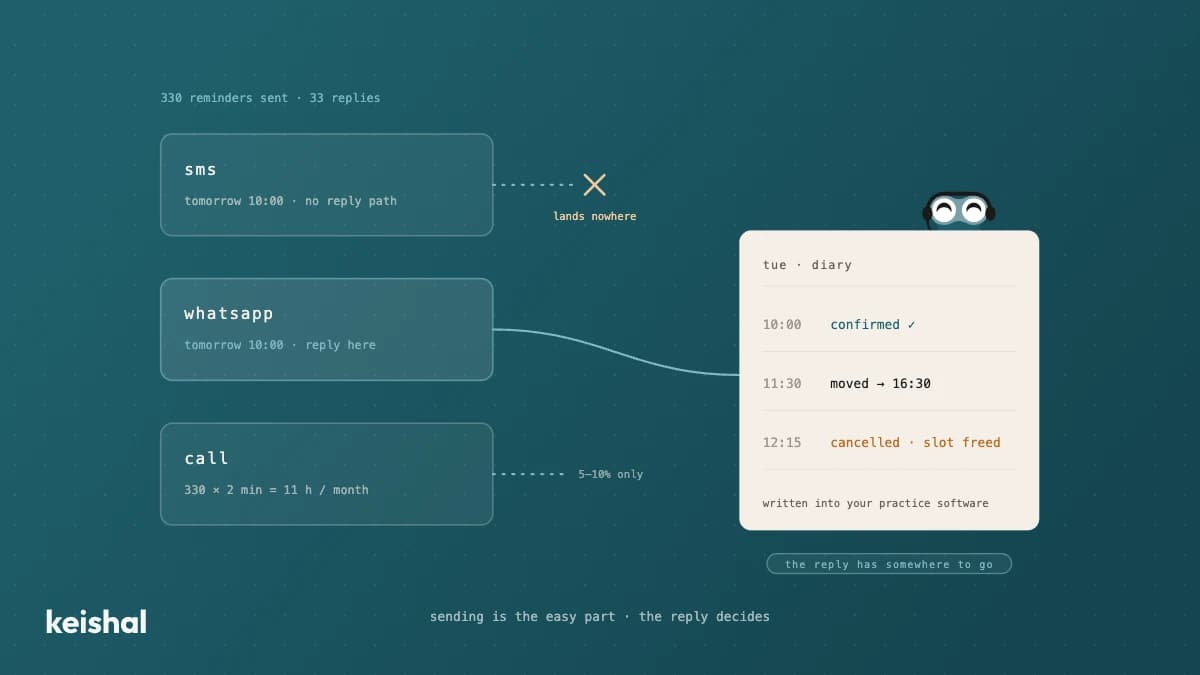
A diary with 15 appointments a day across 22 working days generates 330 reminders a month. If one patient in ten replies, that's 33 conversations someone has to handle: confirmations, reschedules, cancellations that open a slot. That's why the channel matters less than the reply: SMS notifies but rarely listens, WhatsApp resolves things in the same thread, and the phone call is for the cases that need it. In 2026, the real purchase decision isn't "which channel do I buy?" but "who handles what patients reply?".
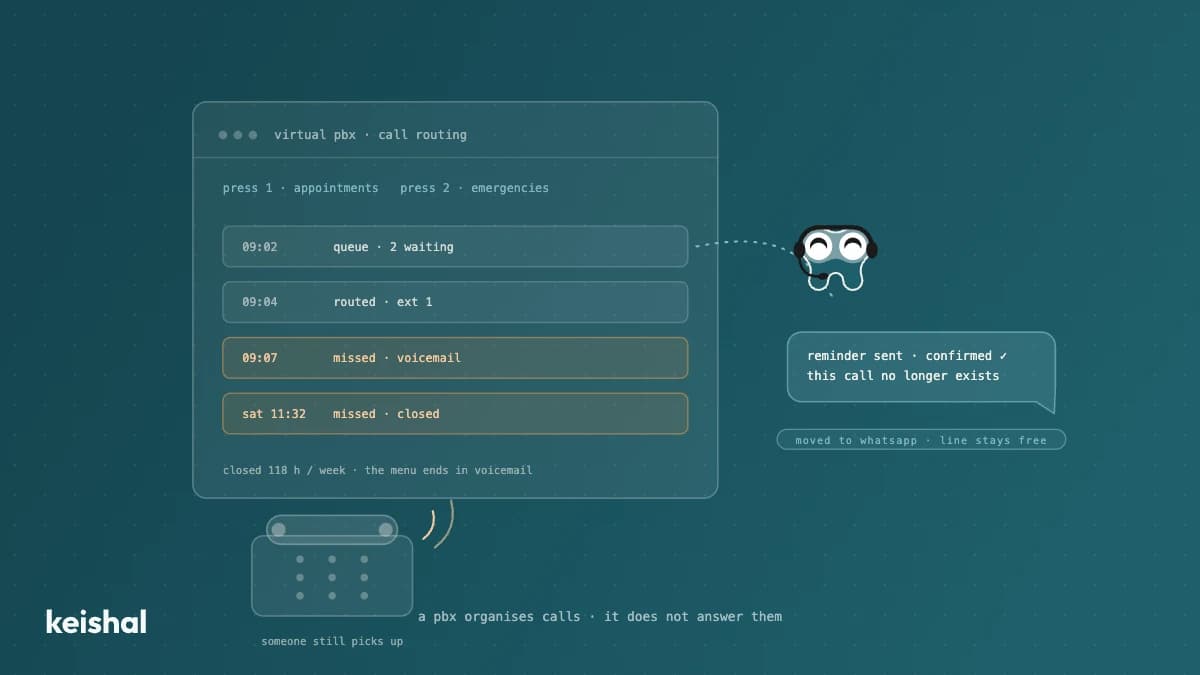
A virtual phone system organises your dental clinic's calls: voice menus, hold queues, forwarding and missed-call logs. What it doesn't do is answer them: someone still picks up, and with 50 opening hours the clinic is closed for 118 of the week's 168 hours (70 %). It makes sense with several locations or lines, or when calls are lost to saturation. If the problem is volume — 40 calls × 3 minutes = 2 hours a day — the higher-leverage move is migrating repetitive tasks (reminders, bookings, questions) to WhatsApp and keeping the phone for the conversations that need it.
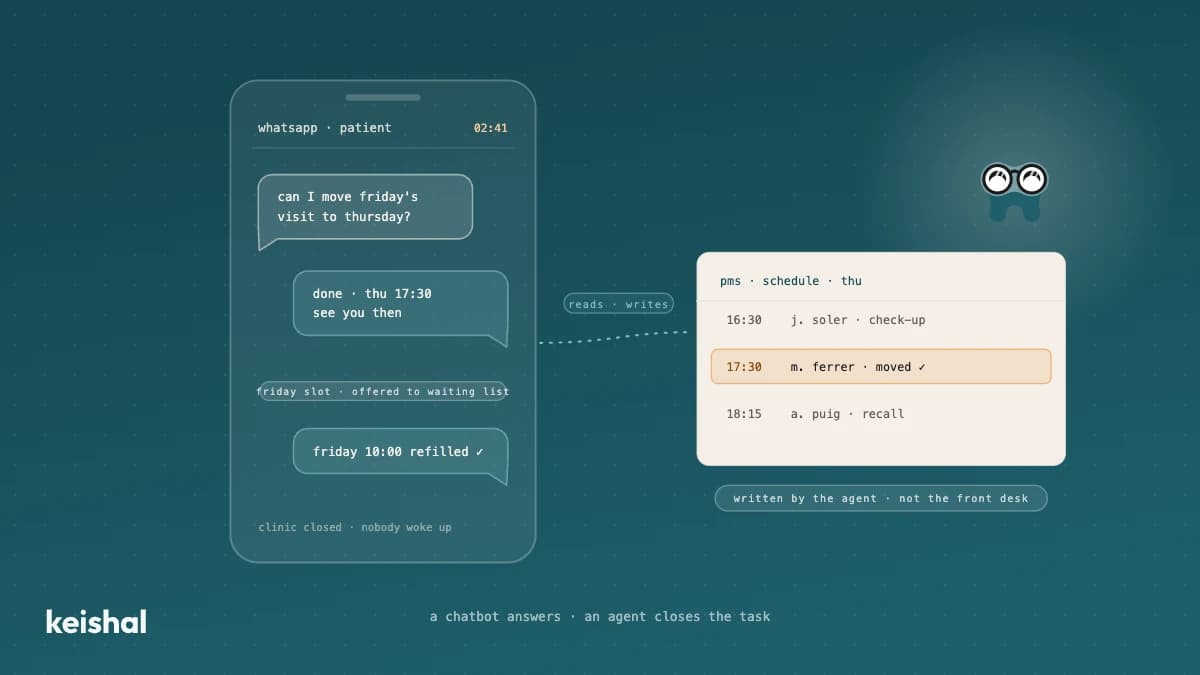
An AI agent for dental clinics is a system that completes whole administrative jobs (reminding, rescheduling, reactivating, answering) and writes the outcome into your practice management software. A chatbot answers messages; an agent closes tasks. The practical difference isn't the intelligence but two things: whether it reads and writes your clinic's real data, and who operates it. To size it with your own numbers: 15 appointments a day × 22 working days is 330 reminders a month; if 1 in 10 gets a reply, that's 33 conversations someone has to handle. An agent exists so that someone isn't your front desk.
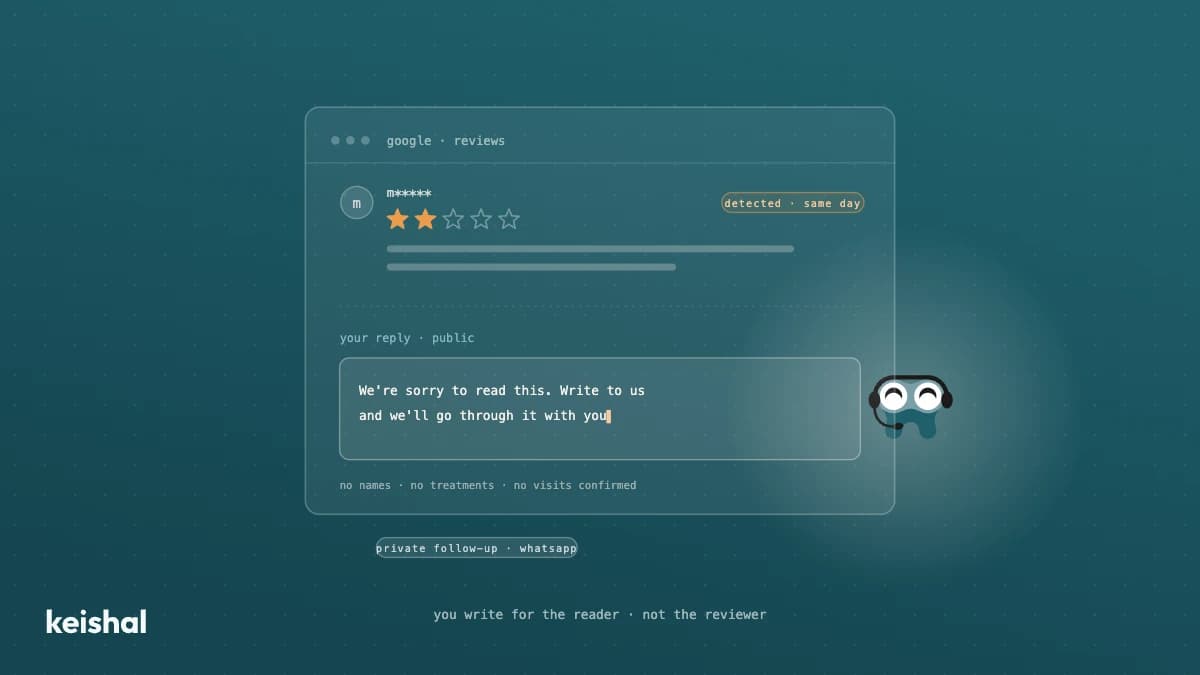
Respond to every review of your dental clinic, and do it as if you didn't know whether the author is a patient: never confirm visits or treatments, because a public reply cannot reveal health data. This guide gives you templates for the four cases (positive, negative with cause, unfair negative, and a review from no patient at all) and an honest split of the work: the public voice is human; asking for reviews, detecting them and the private follow-up of the unhappy patient can be automated. The arithmetic that puts it in perspective: 5 reviews out of 600 visits a month is 0.8%. Every review speaks for hundreds of patients who never write.