Cookies & privacy
We use essential cookies to run the site and, with your consent, analytics cookies to understand how it's used. You can change your choice anytime.
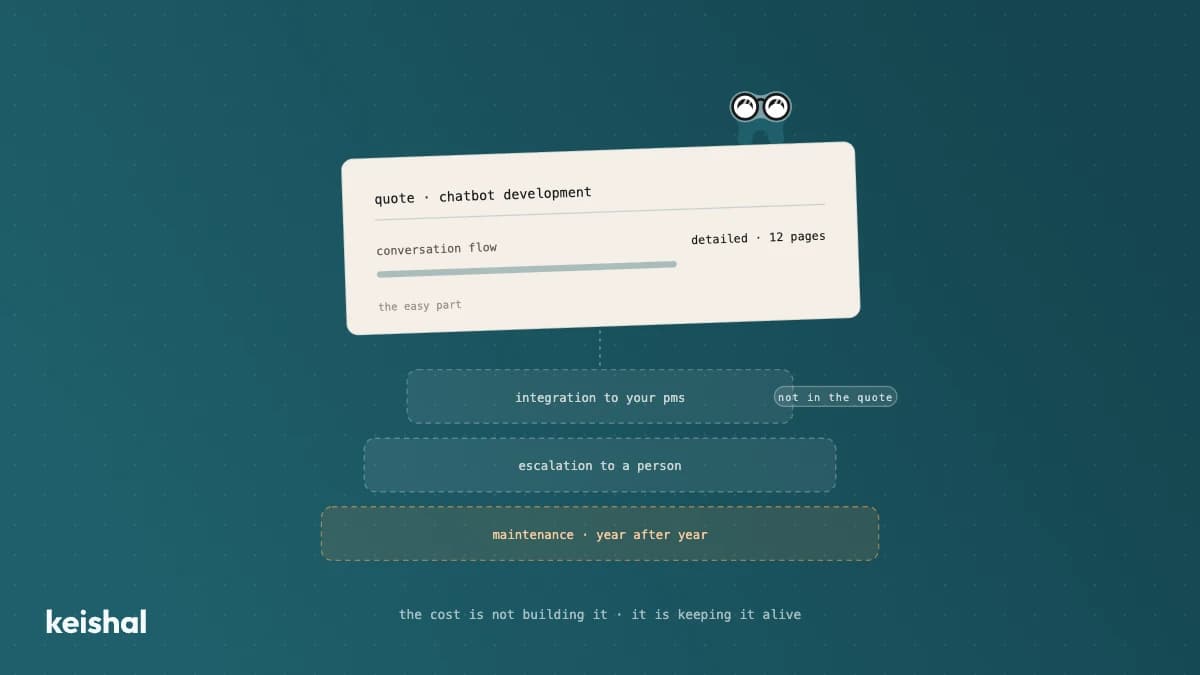
Developing a custom chatbot for your dental clinic involves four costs: the conversation flow (the cheap part), the connection to your practice management software (the expensive one), escalation for when the bot doesn't know the answer, and ongoing maintenance. It pays off if you have singular requirements and a technical team or committed partner to maintain it. For most 2-to-8-chair clinics, the realistic alternatives are a generic chatbot (enough for frequent questions) or an autonomous system that is already built, operated by a third party, and writes into your practice management software. The underlying problem is real: at 50 opening hours a week, 118 of the week's 168 hours (70 %) go uncovered. The decision is not whether to automate the reply, but who carries the system that automates it.
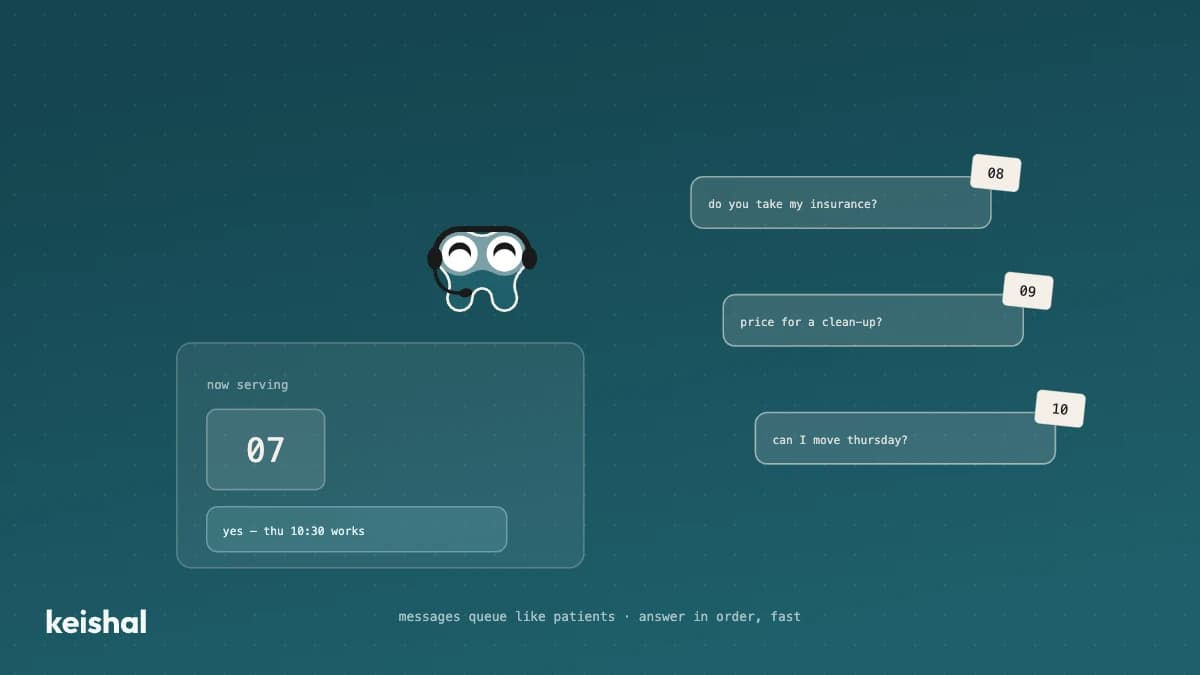
Patient care at a dental clinic is not decided in the chair: it is decided in the gaps between visits. With 50 open hours out of the week's 168, a patient can write during 118 hours (70 % of the time) and find nobody there. Four fronts make it measurable: answering fast even out of hours, reminding for every appointment, following up with patients who leave without a next visit, and asking for feedback afterwards. Running them by hand does not fit into reception's day; an autonomous system operates them on top of your current software.
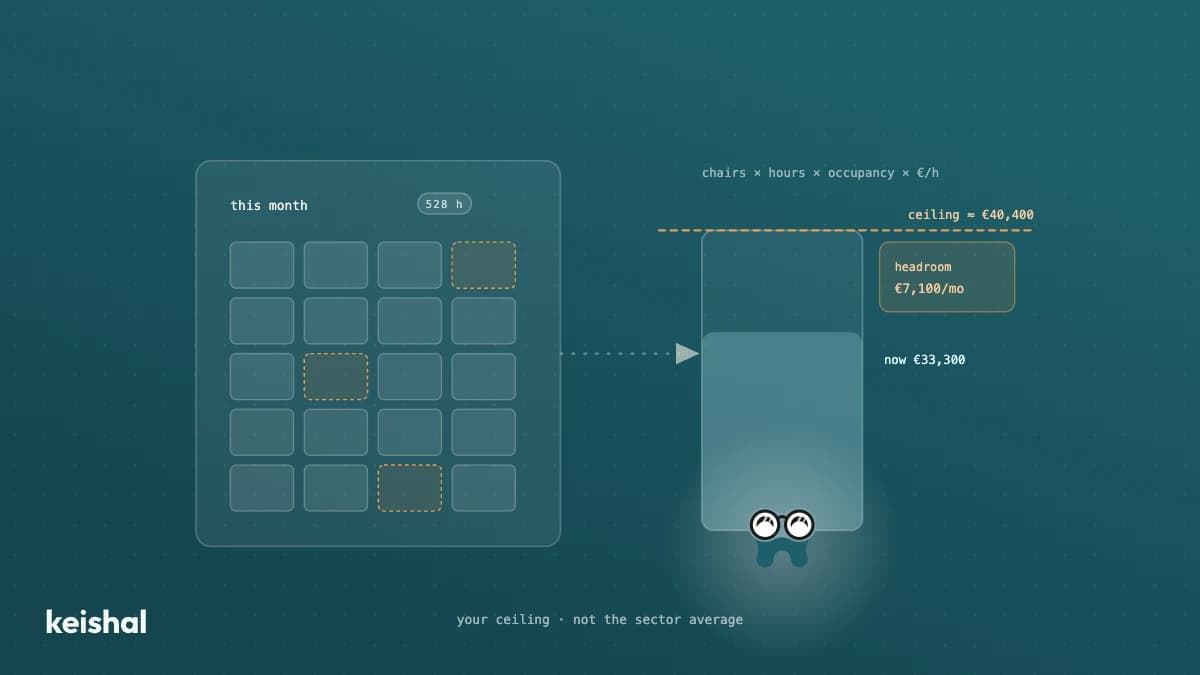
No published average tells you how much your clinic should make: they mix single-chair practices with chains and almost never cite a source. The useful number is your revenue ceiling, and it comes from your own structure: chairs × available hours × realistic occupancy × revenue per occupied hour. With 3 chairs, 528 available hours and 70% occupancy, moving to a realistic 85% is about 79 hours a month you already pay for that currently bill nothing.
A "dental CRM" is the patient-relationship layer — reminders, recall, reactivation, reviews — on top of the PMS, which is your system of record. It makes sense if that work is slipping and you have someone to operate it daily: the tool organises the work, it doesn't do it. Run the numbers: 1,000 dormant patients × 5 minutes is about 83 hours. If nobody can put those hours in, the alternative isn't another CRM: it's an autonomous system that operates for you.
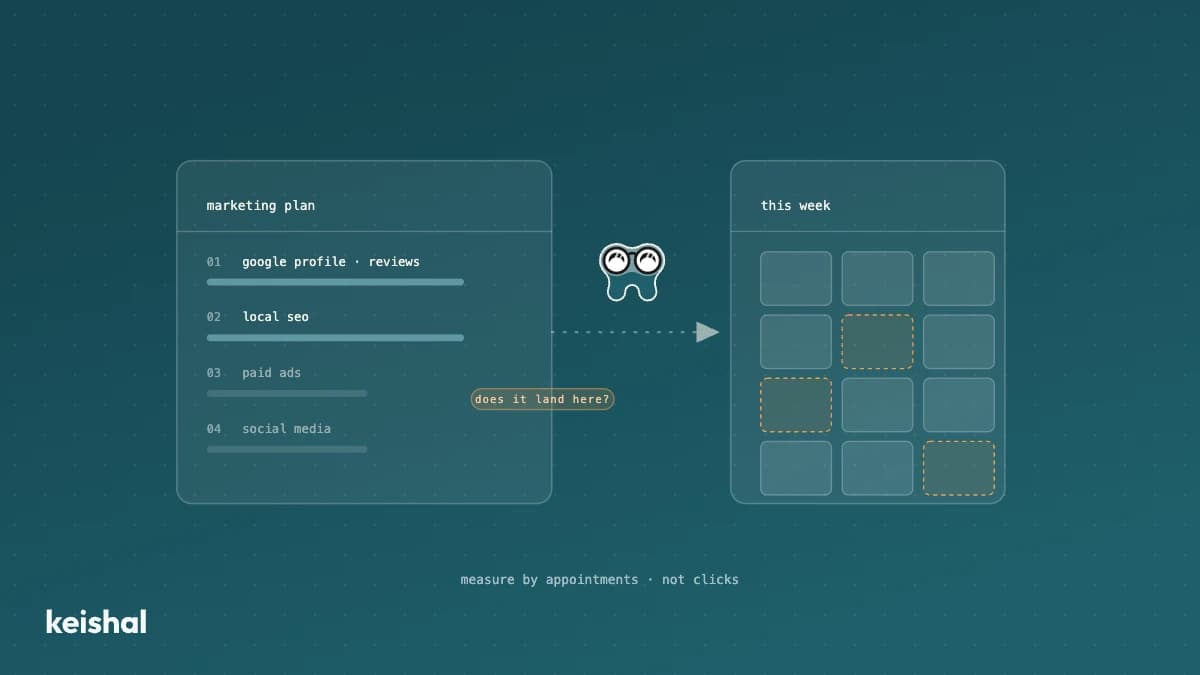
Dental clinic marketing can bring in new demand; what it cannot do is answer the phone. Before signing with an agency, fix what multiplies the return of any campaign: answering outside opening hours too (118 of the week’s 168 hours go uncovered if you open 50), asking for reviews systematically, and reactivating your dormant base (1,000 dormant patients × a €110 average treatment value = €110,000 in stalled treatment). And when you do hire, measure by appointments on the schedule, not by clicks.
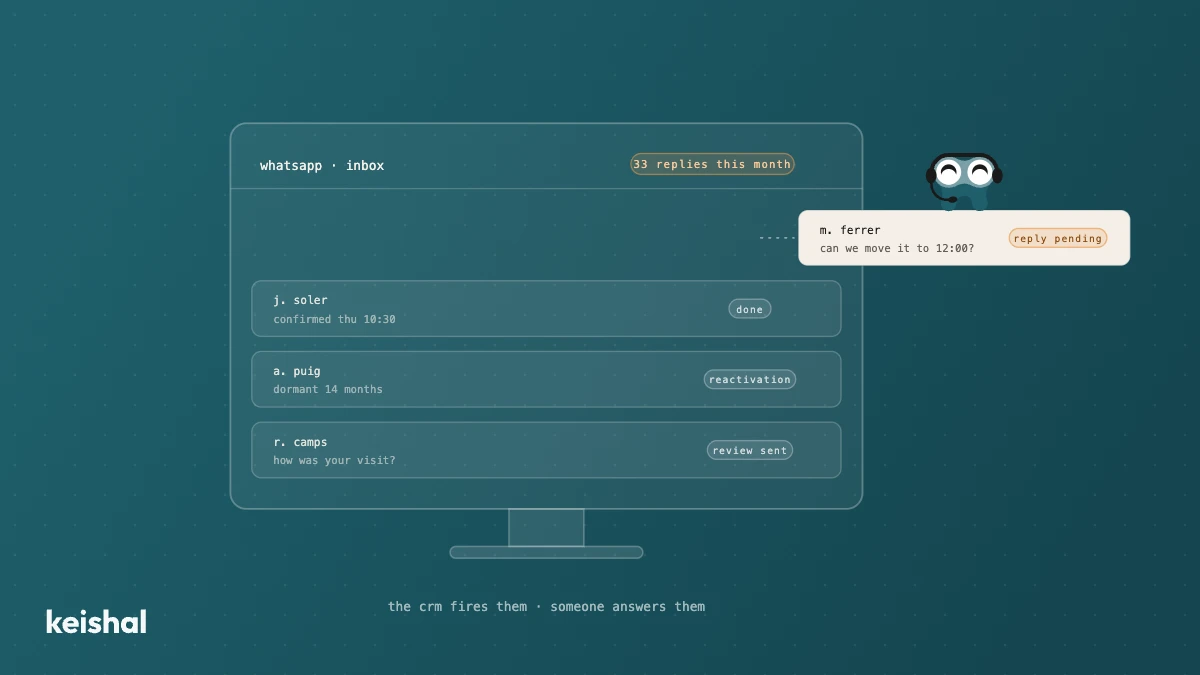
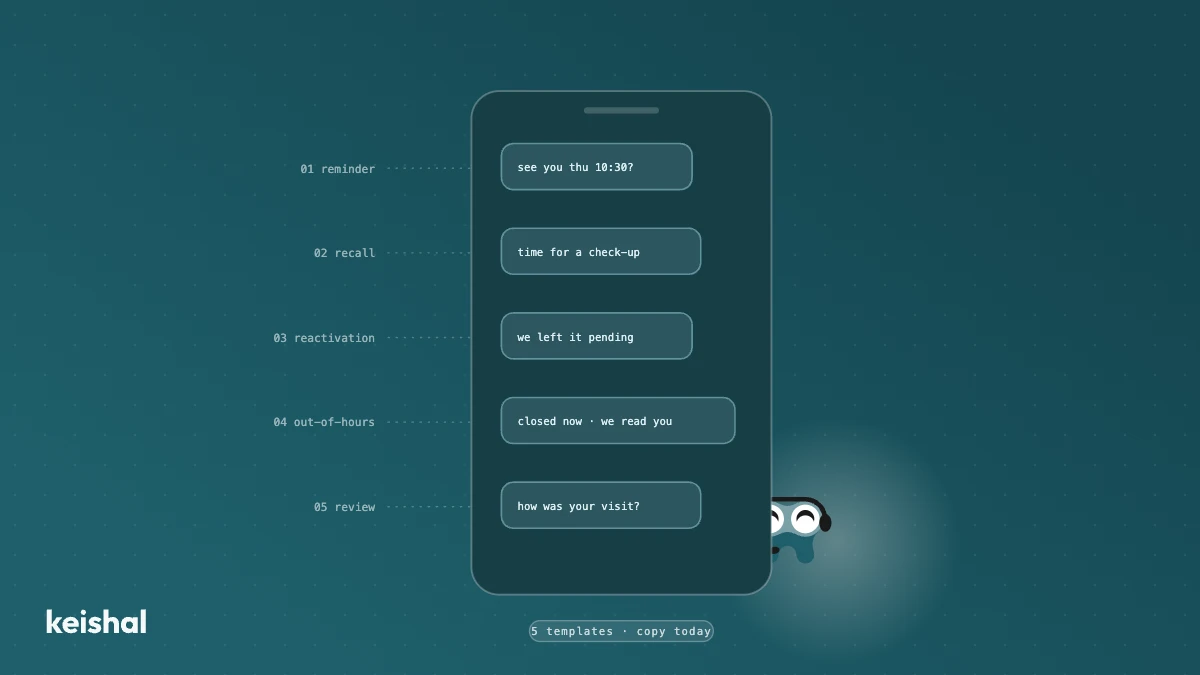
Five WhatsApp templates for your clinic: a reminder with confirmation, a recall message, a reactivation message for dormant patients, an out-of-hours reply and a review request. The text is the easy part: a schedule with 15 appointments a day generates 330 reminders a month, and if 1 in 10 patients replies, that is 33 conversations someone has to handle. Each template comes with the checklist of what that message must be able to handle: confirm, reschedule, escalate and record it in the schedule. Before copying anything, decide who replies.
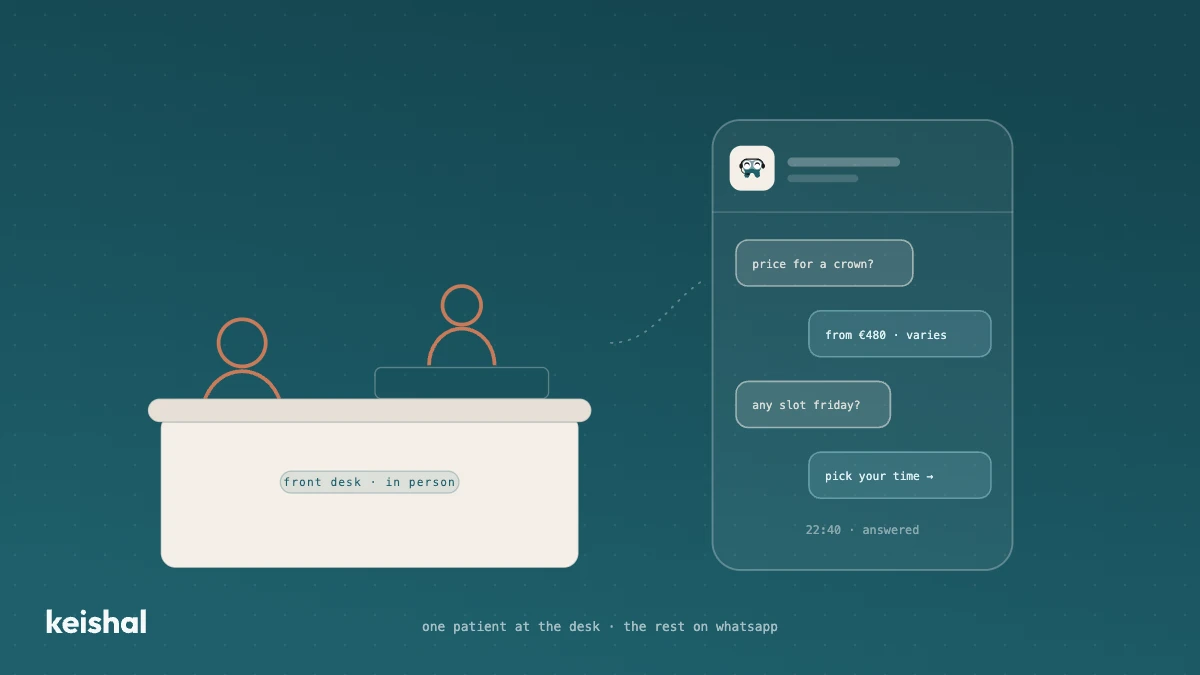
A virtual receptionist should not replace your receptionist: it should absorb the repetitive load that does not fit in their day. A front desk open 50 hours a week leaves 118 of the week's 168 hours unanswered: 70% of the time. An autonomous system covers reminders that get a response, 24/7 booking (WhatsApp chat plus a calendar link), out-of-hours questions with escalation, recall and reactivation. It does not answer the phone: it removes volume from it. The front desk, clinical conversations and complaints stay human.
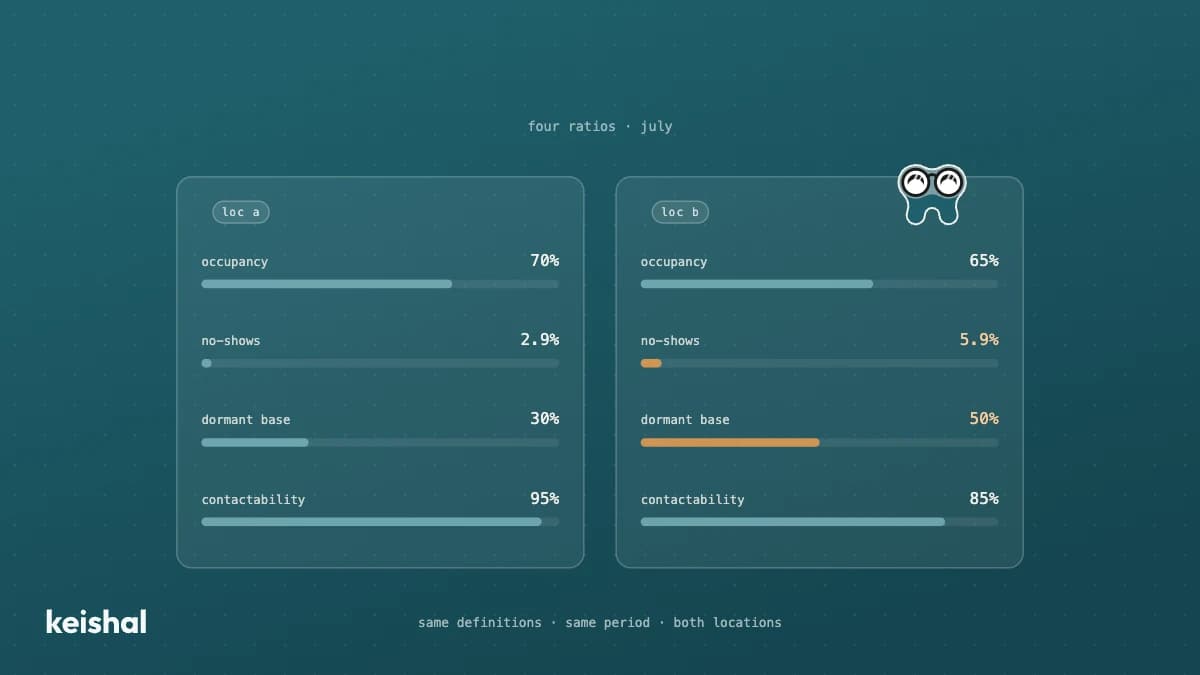
When you go from one clinic to two or three, the bottleneck stops being the schedule and becomes visibility: the location where you are not is a black box. To manage it without being there, compare locations with four ratios computed the same way everywhere — occupancy (370 out of 528 hours = 70%), no-shows over total appointments, dormant base over total database and contactability — and distrust any comparison made with unequal data quality. Total revenue compares sizes; ratios compare management.
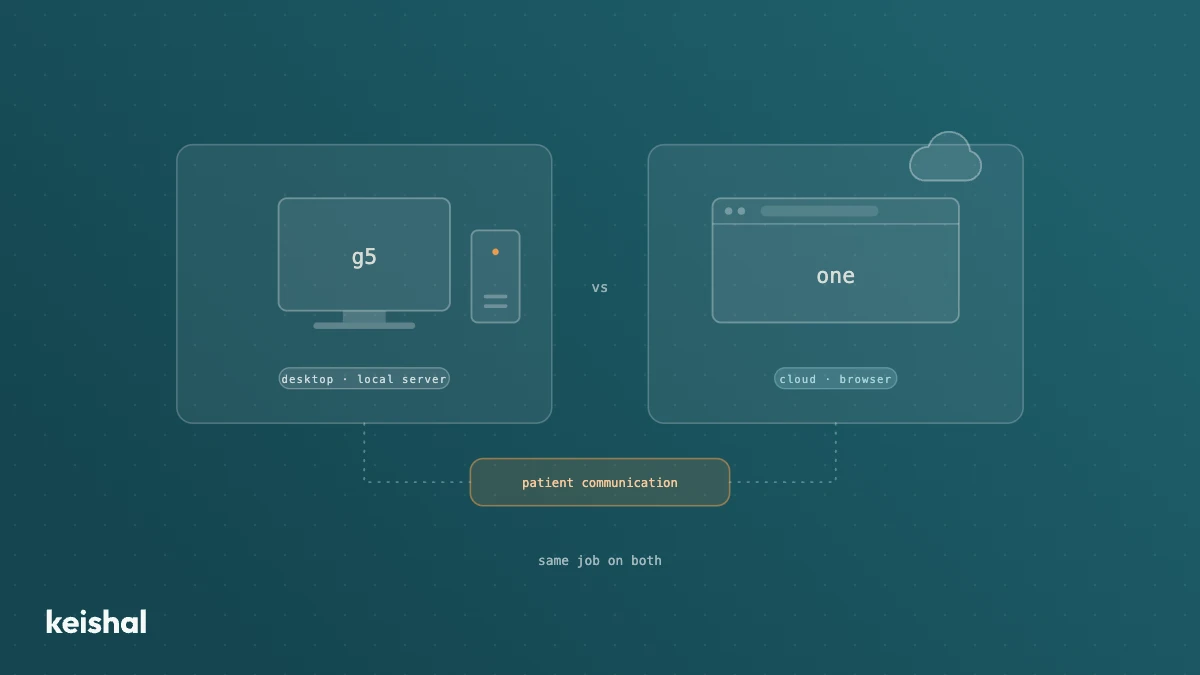
Gesden G5 is the desktop version and Gesden One the cloud version: between them, what changes is where the software lives, access, maintenance and backups. What does not change with either is who operates patient communication: 15 appointments a day across 22 working days means 330 reminders a month, and 1,000 dormant patients at 5 minutes each is about 83 hours of work, on both versions. This guide separates the version decision (locations, server, access) from the operating decision, with the questions to decide using your own numbers.
The order matters more than the channel. Before paying for ads: (1) capture the demand that already arrives and gets lost — if you're open 50 of the week's 168 hours, nobody answers 70% of the time —, (2) reactivate the base you already have — 1,000 dormant patients × €110 average treatment value is €110,000 in stalled treatment — and (3) only then invest in advertising. Ads work, but they're the third layer, not the first.