Cookies & privacy
We use essential cookies to run the site and, with your consent, analytics cookies to understand how it's used. You can change your choice anytime.
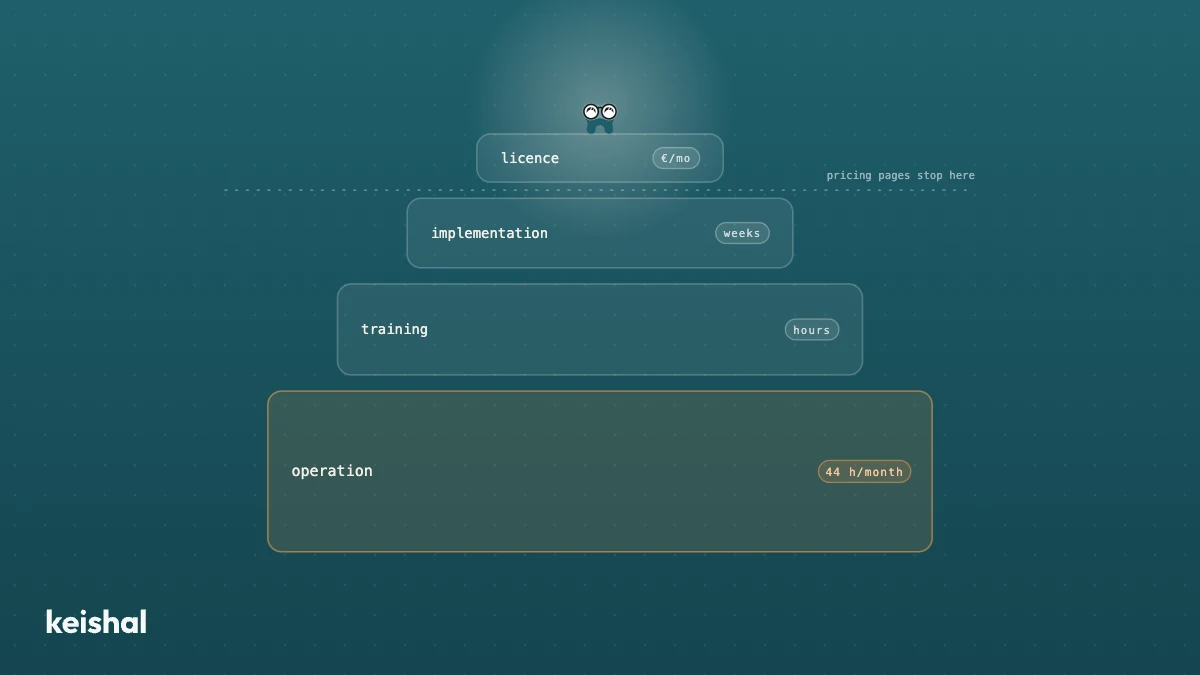
The licence price is only one of the four cost layers of dental clinic software: licence, implementation, training and operation. The most expensive one appears on no price list: just confirming the schedule by hand is 40 calls × 3 minutes = 2 hours a day, and one reactivation campaign of 1,000 dormant patients ≈ 83 hours. Before comparing prices, work out who will put in those hours: a licence nobody operates costs the same and returns nothing.
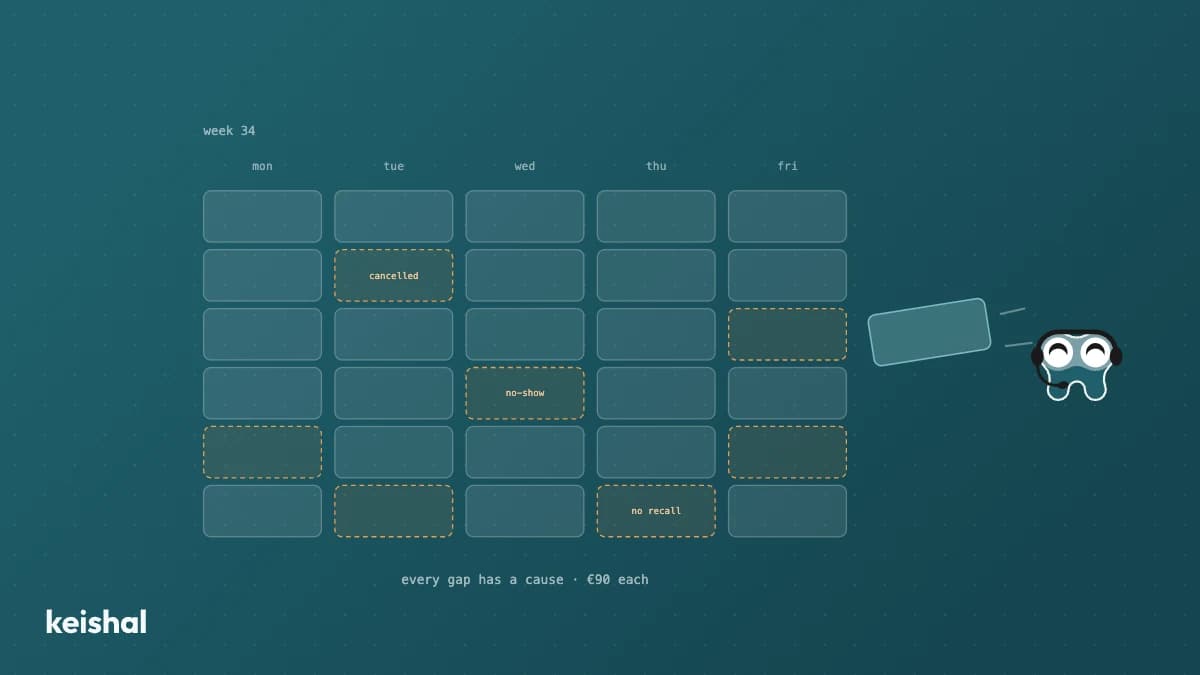
A schedule with gaps is rarely, first of all, an acquisition problem — it's a leak problem: patients who already exist and get lost along the way. Before spending more on marketing, count one week's gaps and give each a cause (late cancellation, no-show, unbooked recall, inactive patient, out-of-hours demand), because each one has a different fix. The arithmetic with your own numbers: 14 gaps × €90 average visit value = €1,260 a week, around €5,000 a month that was already in your schedule.
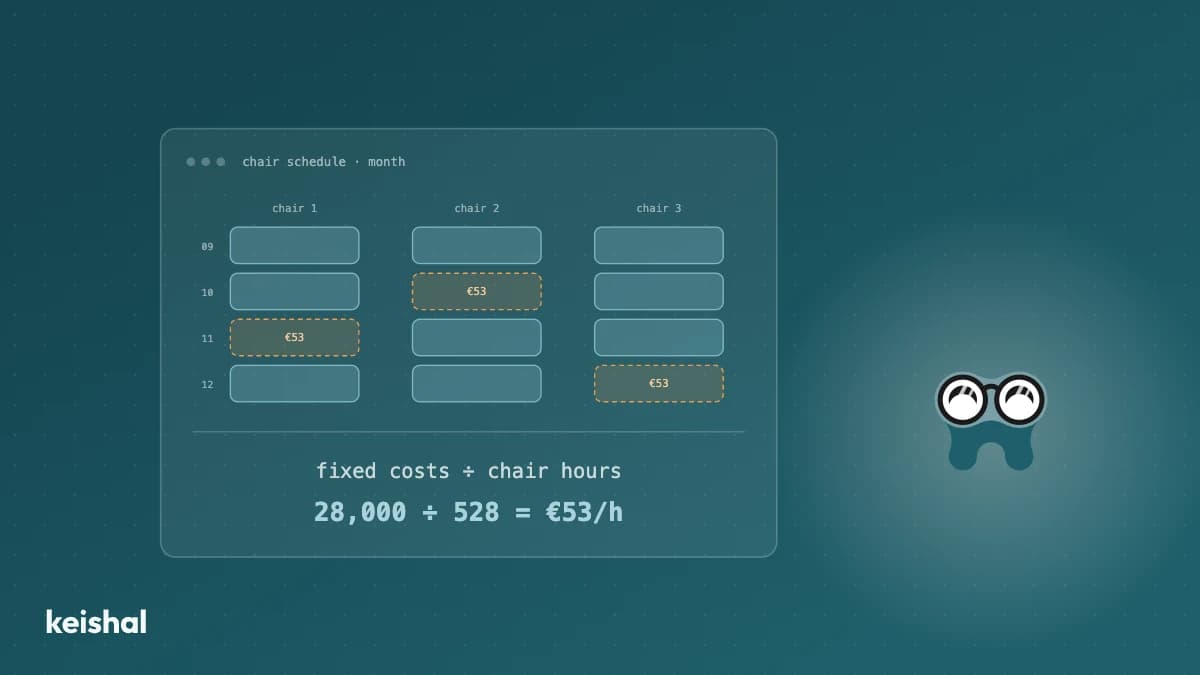
Billing more doesn't mean earning more. Dental clinic profitability comes down to a number almost nobody calculates: fixed cost per chair hour (monthly fixed costs ÷ available chair hours). With €28,000 of fixed costs and 528 hours a month, each hour costs about €53, occupied or not. That number turns schedule gaps and no-shows into concrete costs, and tells you what occupancy you need to cover your costs. Here's the calculation, step by step.
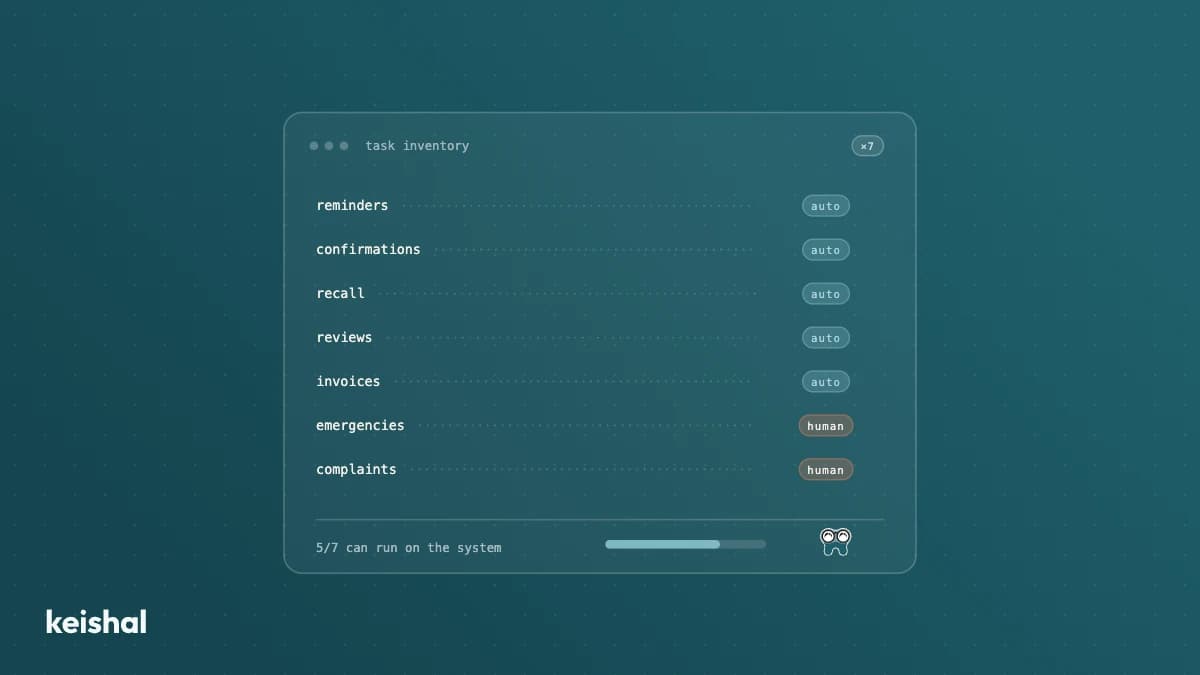
Of a dental clinic's administrative tasks, the repeatable ones with clear rules (reminders, recall, reactivation, appointment booking, out-of-hours questions, reviews and consents) can be automated. The ones requiring clinical judgement or emotional handling cannot. This guide walks through them one by one, with a rollout order by return: reminders first, then recall and reactivation.
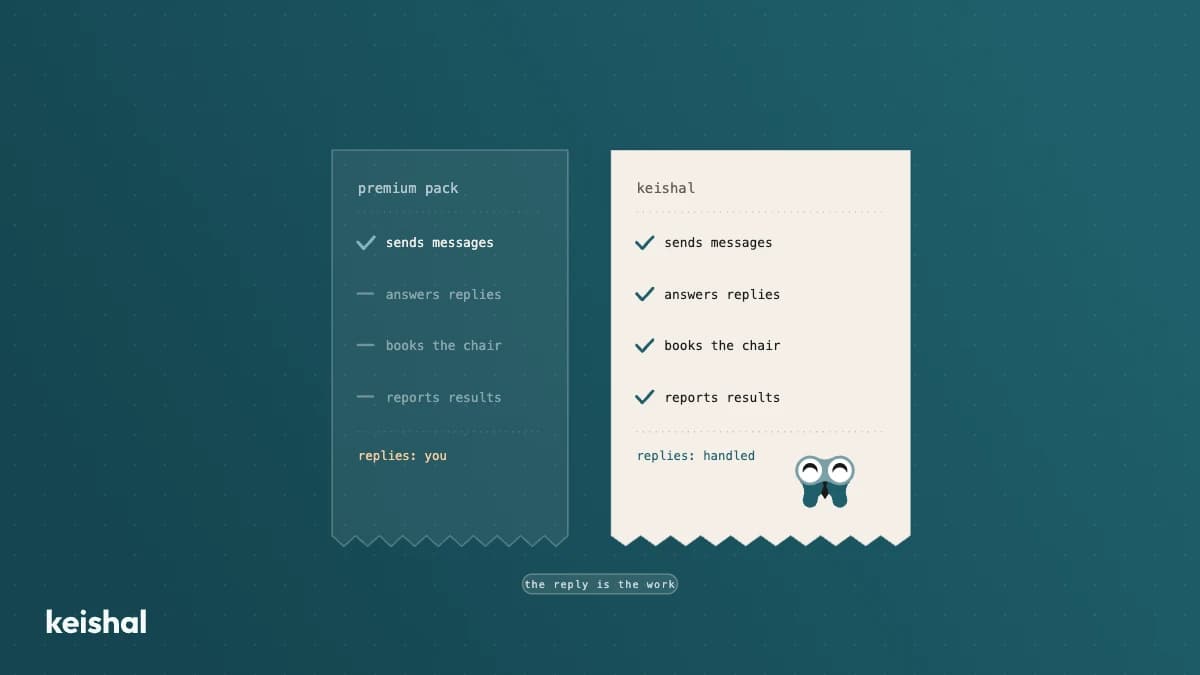
If your clinic runs on Gesden you have two options that don't involve changing software: activating the Premium Pack (a tool your team operates) or adding Keishal (an autonomous system that operates for you on top of your Gesden). The difference isn't technological: it's who does the work every week. Run the numbers: 15 appointments a day × 22 days is 330 reminders a month; if 1 in 10 patients replies with more than 'confirmed', that's 33 conversations someone has to handle. If you have that person, the Premium Pack is a serious option. If not, one more tool won't create the missing hours.
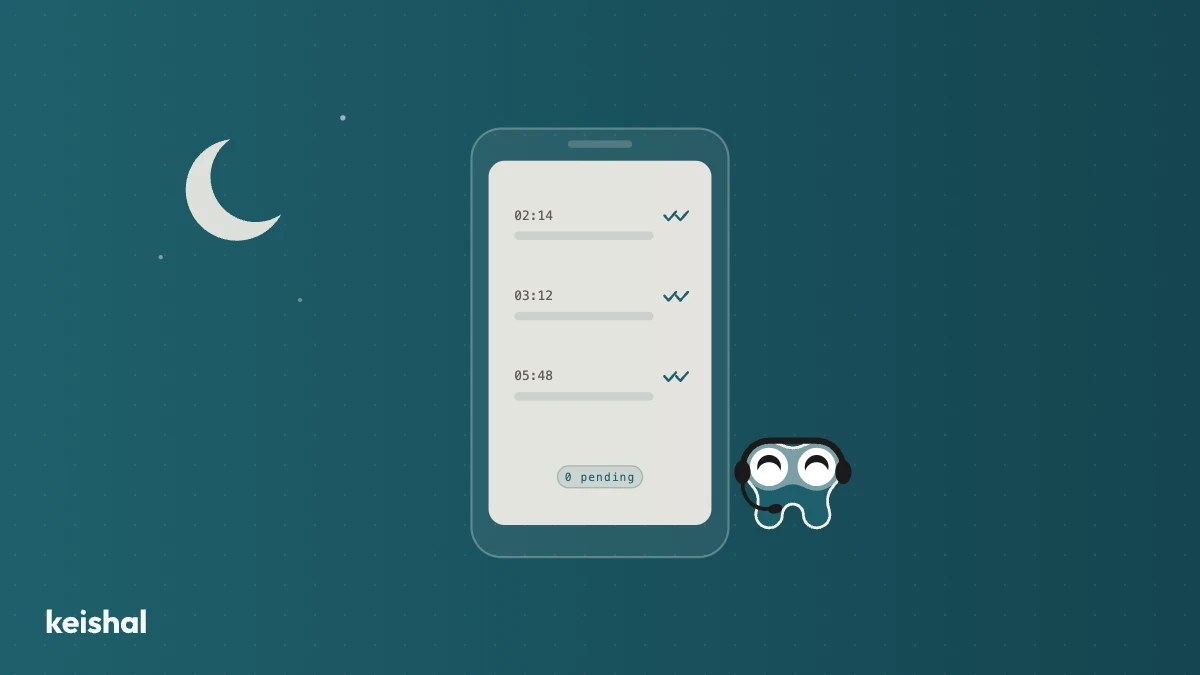
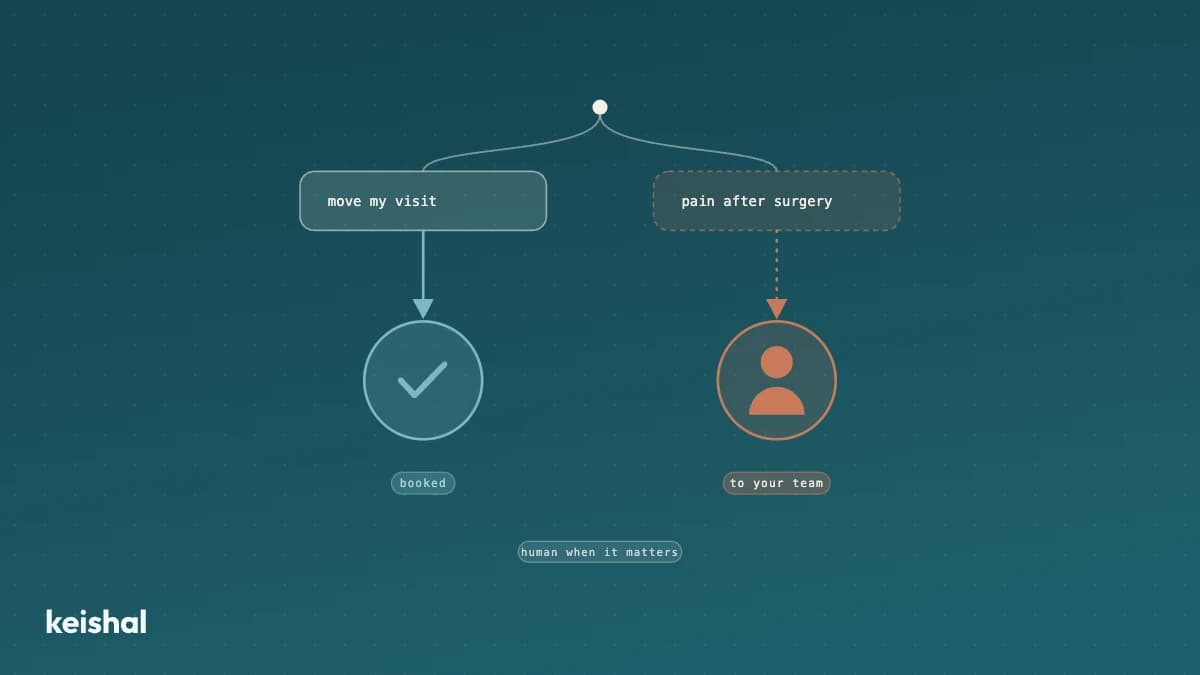
If your clinic is open 50 hours a week, nobody answers the WhatsApp or the phone for 118 of the week's 168 hours: 70% of the week. That's exactly when the questions that decide first visits arrive: "do you take my insurance?", "how much is a cleaning?". An autonomous system answers 24/7 using your clinic's real information and escalates to your team whatever needs a human, without growing the front desk.
A generic chatbot solves a real part of the problem: answering frequent questions when the front desk isn't there, which is 76% of the week's hours if you answer 9 to 5 on weekdays (40 of 168 hours). It falls short at everything that comes next: it doesn't read your practice management software, it can't book appointments or record confirmations, and it doesn't escalate to a person with context. The difference with an integrated system isn't the quality of the answers but the category: one replies to messages, the other finishes the work in your agenda.
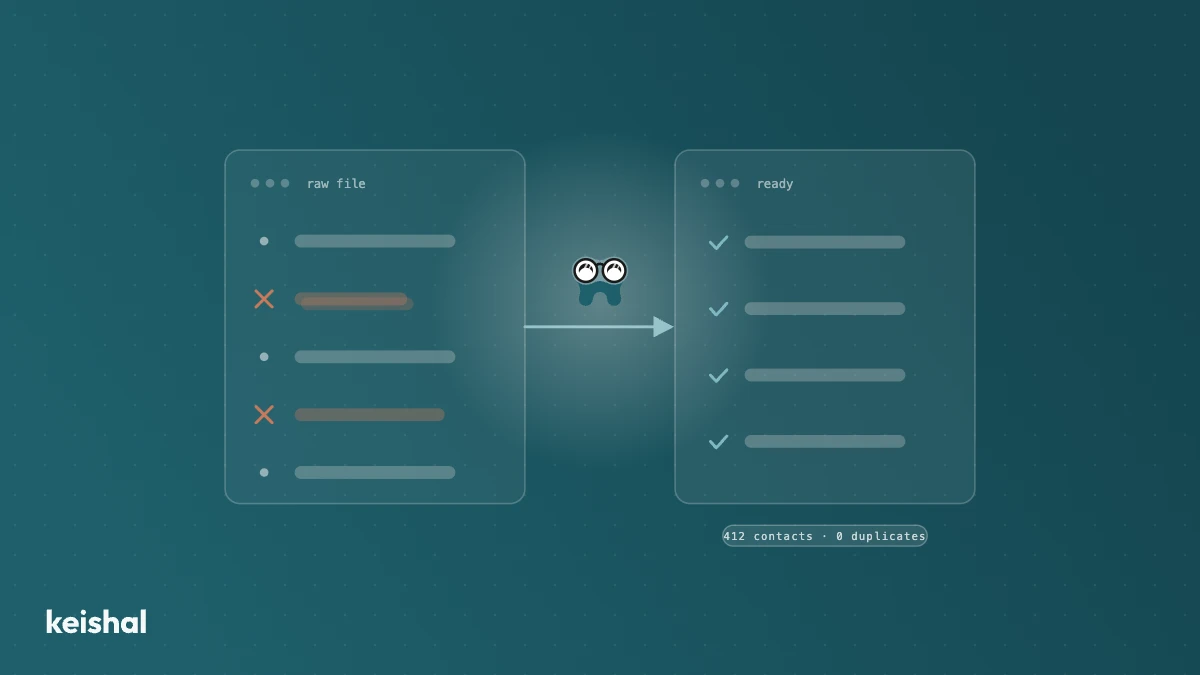
Data quality is the percentage of your patient database you can actually work with: valid phone number, no duplicates, a registered last visit and a stored consent. It sets the ceiling for everything else, because reactivation, recall and forecasting all work on top of that base. The arithmetic is quick: review 100 random records; if 12 have a bad mobile number, in a database of 3,000 that's roughly 360 unreachable patients. And in 2026, with AI systems operating the admin side, a clean database is no longer maintenance: it's the condition for delegating at all.
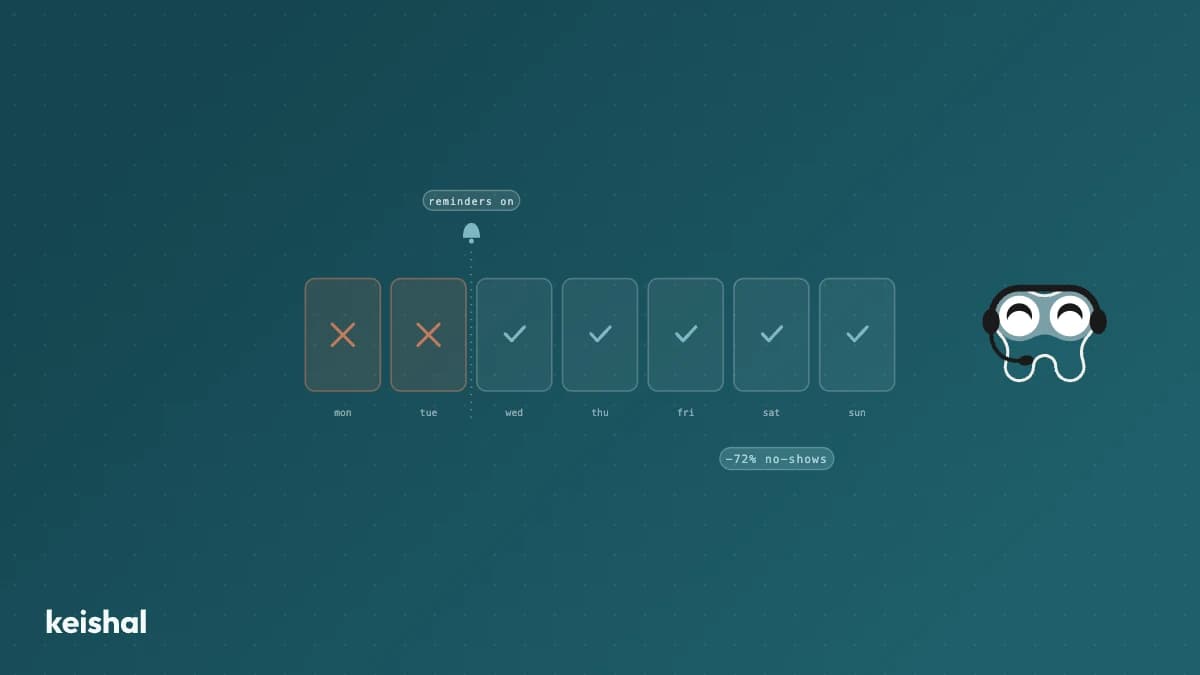
Every no-show is an idle chair with fixed costs still running: 20 no-shows a month × €90 average treatment value is €1,800 a month, €21,600 a year. The defence has two layers working at different moments: WhatsApp reminders that get a response before the appointment, and an automatic waiting list that refills the slot when the cancellation happens anyway. Neither requires changing your practice management software.
"Service-as-a-software" is the model where the provider doesn't sell you a tool to operate yourself, but operates it for you, and you only see the result. The difference from regular software can be counted in minutes: if your team spends even 15 minutes a day configuring reminders, checking why a template didn't send, or learning a new feature, that's 15 × 5 days × 4 weeks = 300 minutes a month, 5 hours operating a tool before it helps a single patient. In the service-as-a-software model, those 5 hours don't exist. The provider absorbs them.