Cookies & privacy
We use essential cookies to run the site and, with your consent, analytics cookies to understand how it's used. You can change your choice anytime.
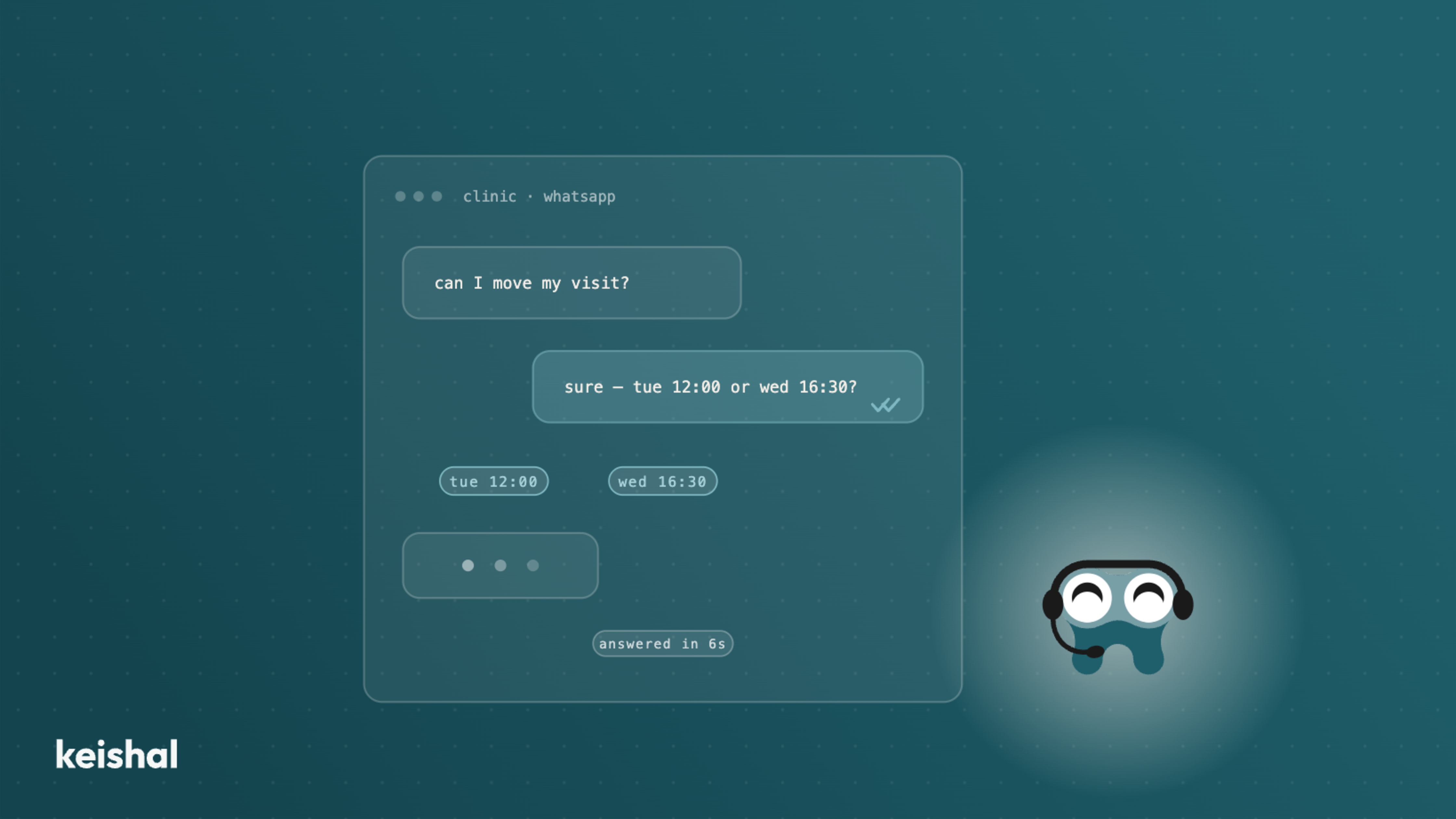
WhatsApp is today the most effective patient communication channel in Spain, with open rates above 95%. It lets you manage reminders, reactivation, bookings, recall, post-treatment follow-up, and much more from the channel the patient already uses every day. That said, communicating with patients — over WhatsApp or any other channel — means handling sensitive personal data, and that carries data protection responsibilities. Doing it with a solid compliance framework isn't just an obligation: done well, it's a signal of trust the patient perceives.
Patients already live inside WhatsApp. They check it several times a day, reply within minutes, and prefer it to phone calls and email. For a dental clinic, this is a huge opportunity: the channel where your patients' attention already is happens to be the cheapest and the highest-response one.
In this guide we review everything WhatsApp lets you do at a dental clinic, and why the way you manage patient communication — consent, security, protection of their data — matters as much as the message you send.
The numbers are striking. When a clinic moves from SMS or email to WhatsApp, open rates jump from 20-30% to over 95%. Recall messages over WhatsApp convert 4 to 6 times more than email. And clinics that integrate WhatsApp into their operations significantly reduce no-shows.
The reason is simple: WhatsApp is the channel the patient already uses every day. They don't have to open an email they never check, or answer a call during working hours. They read and reply when they want, from wherever they are.
The most basic and most profitable use. A message the day before with one-tap confirmation drastically reduces no-shows. The patient confirms, reschedules, or cancels without calling, and your calendar updates.
Contacting patients who haven't visited in months. WhatsApp is ideal here because the message reaches a channel they check, and the patient can reply without the pressure of a phone call. It's the use case with the highest revenue impact.
The patient requests an appointment at any time, even outside clinic hours, and the system books it directly. Many first visits are lost because the patient reaches out at nine in the evening and no one replies until the next day — by which point they've already called another clinic.
Reminding the patient of their check-up or maintenance when it's due. Recall messages over WhatsApp have far higher conversion rates than email or calls. It's the most effective way to maintain continuity of care.
A message 24 hours after a treatment ("how are you feeling? reply if you have any questions") improves patient satisfaction and catches problems before they escalate.
Hours, location, accepted insurance, treatment information. WhatsApp can answer these questions automatically, 24/7, without occupying your front desk.
Sending and receiving signed consents, or asking the patient for a photo of a previous radiograph before the appointment. All through the same channel.
Asking for a Google or Doctoralia review from a patient who had a good experience, at the right moment. WhatsApp has much higher response rates than email for this.
Here's the point worth understanding well, and it goes beyond WhatsApp.
Every time a clinic communicates with a patient — reminding them of an appointment, contacting them for a check-up, requesting a document — it's handling personal data. And in healthcare, that data is a special category: the most protected under the General Data Protection Regulation (GDPR).
This doesn't depend on the channel. An SMS reminder, a recall email, a call noted in a record, or a WhatsApp message: all involve handling a person's sensitive information. The relevant question isn't "which channel do I use?", but "am I handling this data with the right safeguards?".
And here's an opportunity many clinics miss: doing it well isn't just meeting an obligation — it's an advantage. A patient who sees that their clinic looks after their data, asks for permission clearly, and communicates professionally, trusts more. Data protection, done well, is a signal of seriousness that strengthens the relationship.
Without going into legal technicalities — that's what specialised data protection advice is for — these are the elements any clinic should have covered when communicating with patients:
The patient should have given permission to receive communications, ideally explicitly and on record. The most common approach is to include it in the registration form or the documentation they sign at the first visit, in an understandable way: what communications they'll receive and how they can stop receiving them.
The patient must be able to stop receiving messages easily at any time. Respecting and recording those opt-outs is part of handling their data correctly.
Operational communication (reminders, confirmations, bookings) is one thing; delicate clinical details are another. As a rule of prudence, sensitive clinical information shouldn't travel in plain text over messaging channels.
Who accesses the conversations, where the data is stored, and under what agreements it's handled are questions every clinic should be able to answer. When an external provider is involved, the norm is an agreement regulating that processing, with the clinic as the controller.
The specific compliance framework — which consents, what documentation, what measures — is something worth defining with specialised data protection advice. It's not an "extra": in a sector that handles health data, it's part of operating seriously.
If you decide to use an external tool or provider to manage patient communication — and most clinics do — it's worth bearing in mind: that provider will handle your patients' data. It's not a minor decision.
Many communication solutions on the market prioritise price or speed of setup over data protection safeguards. Before choosing, it's worth asking things like: where is the data stored? Do they sign a processing agreement? How do they manage consent? Do they have data protection guidance in place?
A serious provider in a sector that handles health data should be able to answer all these questions without hesitation. If they can't, that's a red flag.
At Keishal we operate patient communication over WhatsApp with these safeguards built in by design. We explain our approach in more detail in the guide on how to apply artificial intelligence at a dental clinic.
WhatsApp is the best channel to communicate with your patients. And doing it with safeguards, far from being a brake, is what turns that communication into a relationship of trust. If you want to see how patient reactivation over WhatsApp works at a clinic like yours, book a call or calculate your database's potential.
A virtual receptionist should not replace your receptionist: it should absorb the repetitive load that does not fit in their day. A front desk open 50 hours a week leaves 118 of the week's 168 hours unanswered: 70% of the time. An autonomous system covers reminders that get a response, 24/7 booking (WhatsApp chat plus a calendar link), out-of-hours questions with escalation, recall and reactivation. It does not answer the phone: it removes volume from it. The front desk, clinical conversations and complaints stay human.
When you go from one clinic to two or three, the bottleneck stops being the schedule and becomes visibility: the location where you are not is a black box. To manage it without being there, compare locations with four ratios computed the same way everywhere — occupancy (370 out of 528 hours = 70%), no-shows over total appointments, dormant base over total database and contactability — and distrust any comparison made with unequal data quality. Total revenue compares sizes; ratios compare management.