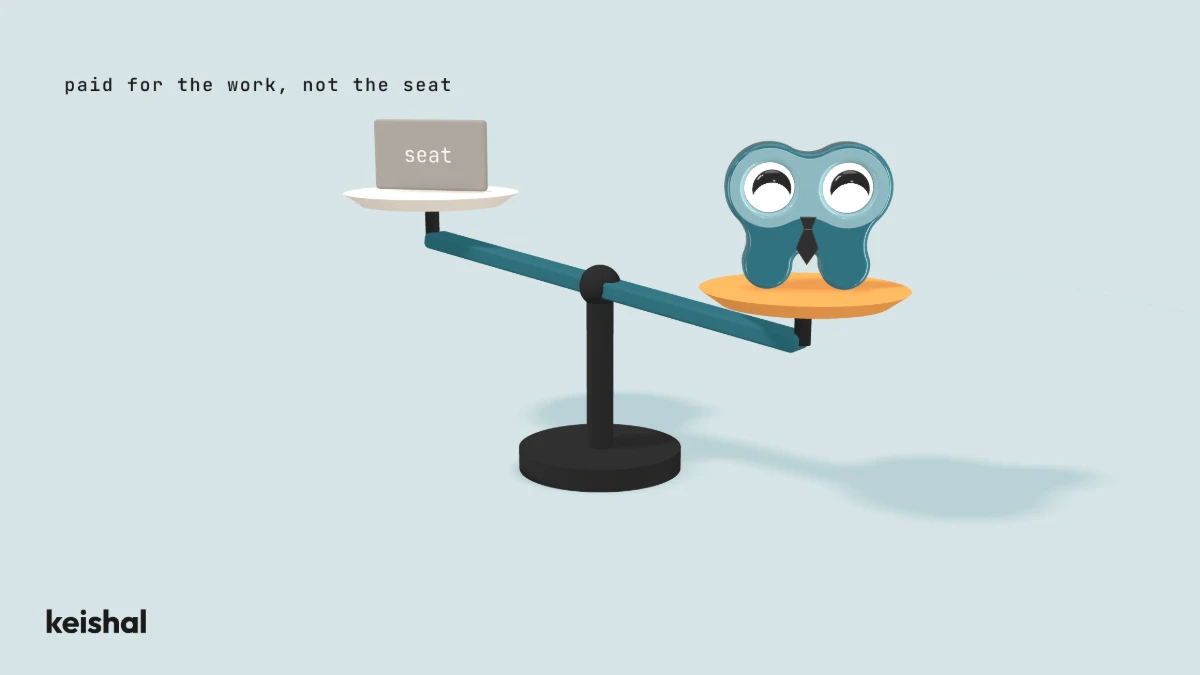
Service-as-a-software in dental practices means the vendor operates the admin tool and is paid for completed work, not per seat. Dental admin software under-delivers in the gap between licensed and operated: in an illustrative practice, 300 outbound tasks take 19 hours a month and the front desk has 10.5, so about 55% gets done. The model needs PMS write-back, an auditable outcome, suppression, hand-offs to people and AI disclosure, and doesn't fit every practice.
Service-as-a-software in dental practices means the vendor operates the tool and is paid for the work it completes, rather than licensing a seat and leaving the practice to run it. The difference matters because dental admin software rarely fails for lack of features. It fails in the gap between licensed and operated: the recall module exists, and nobody has the hours to work it.
This piece is for readers who look at the category from the outside: investors, practice-software vendors, dental groups and partners. It explains where the gap comes from, what changes when the vendor takes on the operating, what the model demands of that vendor, and where it doesn't fit.
What service-as-a-software means in dentistry
The phrase spread in venture writing in 2024, with Foundation Capital's essays on service-as-software among the best known.
The idea is simple. Software used to support the person doing a job. With language models, software can do a share of the job itself, so the vendor can sell the work rather than the tool.
In dentistry the idea lands on a specific layer. Clinical work stays with the dentist. The administrative layer around it (confirmations, recall, cancelled slots, lapsed patients, reviews) is where most practices already own software and where most of that software goes under-used.
Two clarifications before the economics:
- It isn't a managed service with a new name. A traditional managed service sells people's hours. Its cost grows with every clinic it takes on.
- It isn't SaaS with a support desk. If the practice still has to decide who to contact, answer the replies and fix the bookings, it is still software the practice operates.
Why dental admin software under-delivers: licensed is not operated
A practice management system can produce a list of patients due for a check-up. A messaging tool can send a reminder. Neither books the appointment.
Between the list and the booked visit sit decisions and conversations: who to contact, what to say, answering the reply at 21:40, offering a slot, writing the result back.
That work needs front-desk minutes, and front-desk minutes go first to the patient standing at the desk and the phone that is ringing. Outbound work is what waits. We explain the mechanics step by step in why dental recall fails, even with recall software.
The pattern shows up in sales conversations. A clinic in Catalonia told us about a patient-communication tool it was paying for: "We have it contracted but we do nothing with it. We don't even know how to use it." (WhatsApp conversation, May 2026, translated from Spanish.)
That is one clinic, not a statistic. It is also the shape of the problem: the clinic bought capacity it had no hours to use.
The arithmetic of the gap
Run it on your own practice. The numbers below are an illustration for a three-surgery practice, not a benchmark. Swap in yours.
Routine outbound work in a month:
| Task | Volume | Minutes each | Minutes |
|---|---|---|---|
| Confirmations that need a reply handled | 120 | 3 | 360 |
| Recall contacts due and not booked at the chair | 150 | 4 | 600 |
| Cancelled slots offered to 3 patients each | 30 | 3 × 2 | 180 |
| Total | 300 tasks | 1,140 min ≈ 19 h |
Now the capacity. Say the front desk has 30 free minutes a working day for outbound work, over 21 working days: 30 × 21 = 630 minutes, 10.5 hours. That covers 10.5 ÷ 19 ≈ 55% of the work, and only if every free minute goes to it.
Now the cost. Take a placeholder licence of €300 a month, not anyone's price. The vendor's slide divides it by all 300 tasks: €1 per task.
The practice completes about 165 (55% of 300): €300 ÷ 165 ≈ €1.82 per task. The price didn't change. The share of the work that happens did.
Two limits worth saying. Some of those 300 tasks would not produce a visit even if worked: patients move, change clinic or don't need the appointment. And a practice with more free hours closes more of the gap on its own.
The point is structural. Under a seat licence, the vendor's revenue doesn't move when the work isn't done, so the practice carries the gap.
For what the unworked part costs in cancelled slots, see what a no-show costs and what the reminder actually recovers.
What changes when the vendor operates the tool
Service-as-a-software moves the operating from the practice to the vendor. The vendor decides, within rules the practice approves, who to contact and when. It holds the conversations, closes the booking, writes it back and comes back to the ones who didn't answer.
Three things change for the practice:
- The front desk stops being the bottleneck for outbound work. The 19 hours stop competing with the patient at the desk.
- The question becomes "what got done?", not "did we use it?". The practice judges the vendor on appointments in its own diary, not on logins.
- Incentives line up. A vendor paid for completed work has a reason to close the gap. A vendor paid per seat doesn't.
Why wasn't this possible before? Operating a recall list for a clinic used to mean a person on the phone, so the model had consultancy economics: every new clinic needed more hours.
Our reading is that models now handle the routine conversations, and people handle the exceptions. That is what lets one operator serve many practices. It also means the vendor's people don't disappear: someone still owns the rules, reads the hand-offs and answers for the result.
What the model demands of the vendor
Selling the outcome is easy to say. These are the conditions that make it true.
- Read and write-back to the practice management system. If the booking ends as a message someone has to retype, the outcome is a to-do. The vendor needs to read availability and patient context, and write appointments and statuses back.
- An outcome both sides can audit. A booked appointment in the practice's own system, and later an attended visit. Not a count of messages sent.
- Suppression before any outreach. Patients who opted out, flagged as deceased or moved, or marked "do not contact" are excluded first.
- Hand-offs to people. Anything clinical, complaints, billing disputes and any patient who asks for a person go to the practice team. We map those hand-offs task by task in what a dental AI receptionist actually does.
- Transparency that the patient is talking to an AI. In the EU, the AI Act's transparency obligations (Article 50) apply from 2 August 2026. How they apply to a given product is a question for specialist advice. Building disclosure into the conversation from the first message is simply good practice, and patients trust it more.
- A clear data role. The practice is the controller of its patients' data, the vendor a processor, with a written data processing agreement and data stored in the EU.
- An accountable owner on the vendor side. When a reply goes unanswered on a Saturday, someone at the vendor should know before the practice does.
Where the model doesn't fit
The model isn't right for every practice. Saying where it fits less is part of explaining it.
- Practices that already run it well. A practice with a dedicated person who works recall and confirmations every day, with the hours to do it, has a small gap. Software they operate may be all they need.
- Practices that want to write every message. An operated model works within approved rules and templates. A clinic that wants to approve each message individually gives up most of the benefit.
- Small patient lists. If the outbound work fits in the front desk's free hours, there is little to buy.
- Payment systems where a returning patient isn't revenue. The model's economics rest on practices paid per treatment, where a patient who doesn't come back is income the practice doesn't earn. Where clinics are paid by contract, quota or salary, the outcome has to be redefined around capacity, or the model doesn't hold. How dentistry is paid differs by country, so this has to be checked country by country. For Spain, we describe it in the dental software market in Spain.
- Clinical work. Diagnosis and treatment stay with the dentist. Service-as-a-software in dentistry is an administrative model.
Four tests for a service-as-a-software vendor
For an investor or partner evaluating a company that claims the model:
- Does the vendor's revenue move when the work isn't done? If not, it is selling seats.
- Where does the outcome live? In the practice's own system, or in the vendor's dashboard only?
- Who operates it day to day? Names and responsibilities on the vendor side, not "the practice configures the workflows".
- What does each new practice cost to run? Under the model, the people hours per practice should fall as volume grows. If they grow in step with clinics, it is a managed service.
Keishal as one example of the model
Keishal applies this model to dental clinics: a digital coworker that operates the non-clinical side of the practice. It runs on the clinic's existing practice management system and WhatsApp number, reads patient context, and writes appointments and statuses back (integrations).
Booking happens through a WhatsApp conversation and a calendar link where the patient picks the slot. Suppression runs before any outreach, patients are told they are talking to an AI assistant, and the clinic's team gets the cases that need a person.
We serve clinics in Spain, and we are researching Portugal. We don't publish prices or our results. If you want to see how the model works for a clinic, book a demo.
Guillem López, co-founder of Keishal, works on the commercial side with dental clinics in Spain. Last updated November 2026.
WhatsApp for dental clinics: everyone is on it, almost nobody books through it
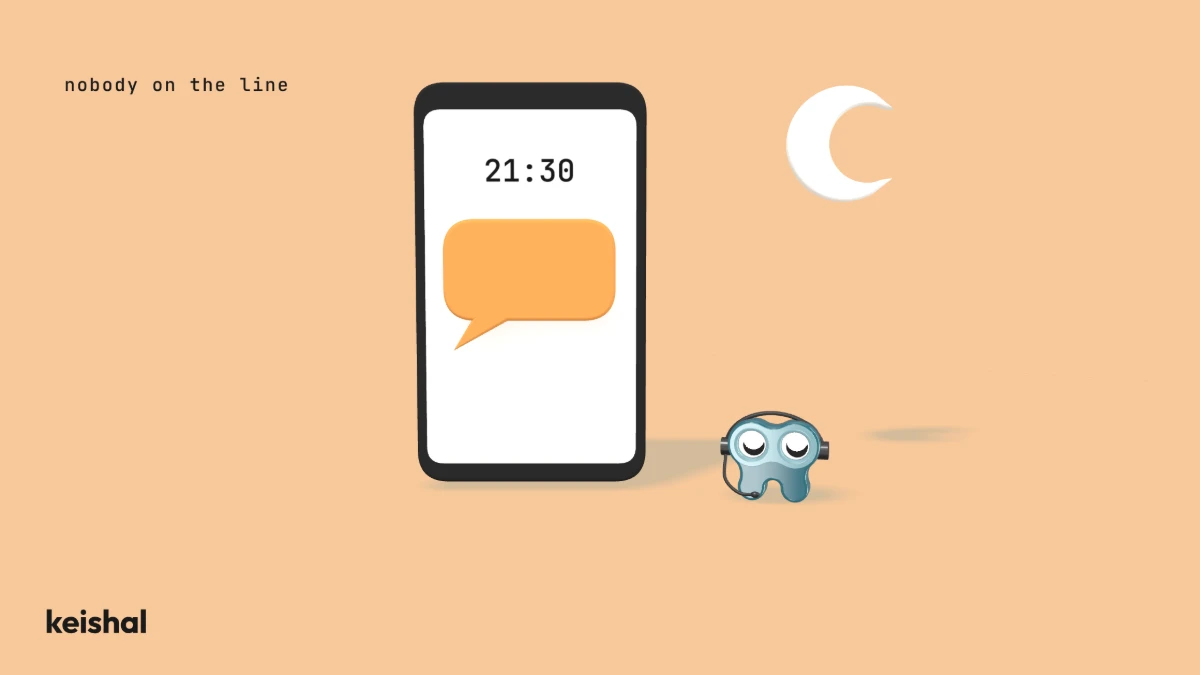
WhatsApp for dental clinics in southern Europe has reach but little use. In Portugal, 79% of online adults used WhatsApp in the past week (Reuters Institute, 2026), yet 65.3% of patients book by phone and only 1.8% book online through social networks, WhatsApp or a website (OMD Barómetro 2025). The bottleneck is who operates the line: usually one person, in office hours, about 32% of the week.
Dental practice management software integration: read for context, write back the outcome
Dental practice management software integration, for a system that talks to patients, means two directions: read the practice system for context (agenda, contact details, last visit, do-not-contact flags) and write the outcome back (appointments, statuses, documents). Without write-back, every outcome is re-keyed by hand: 150 changes a month at 2 minutes is 5 hours in an illustrative clinic. In a fragmented PMS market like Spain's, the answer is a modular connector layer, not one deep integration.