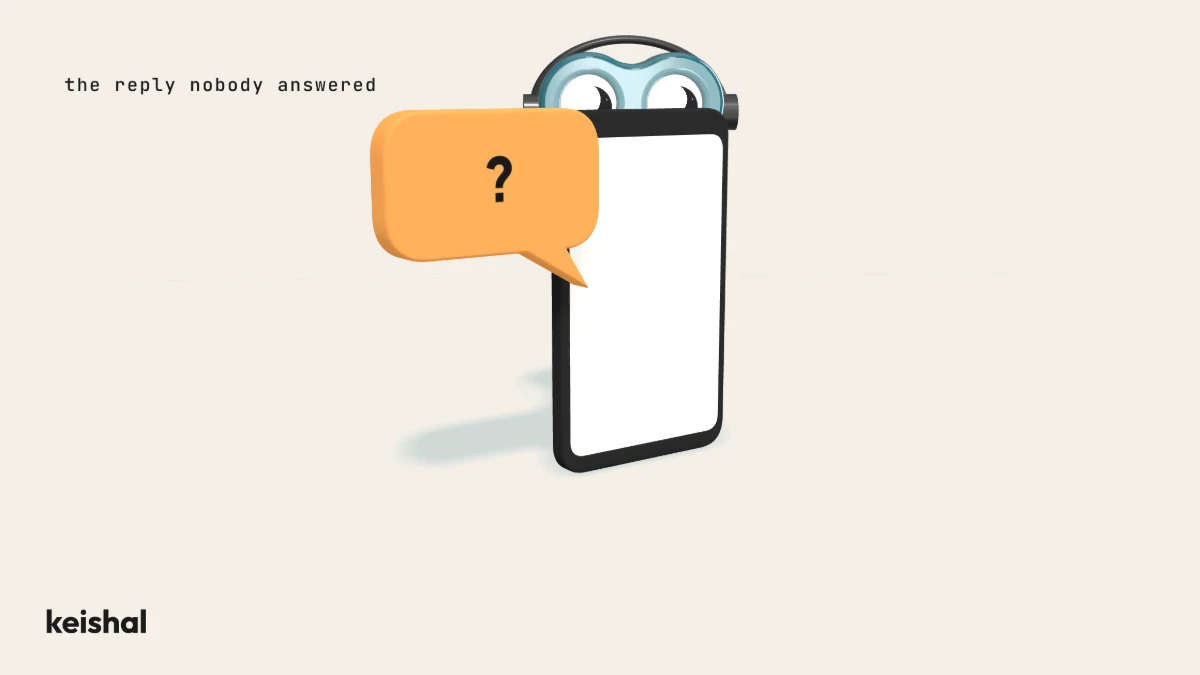
Dental recall software produces the list of overdue patients and sends a reminder. Recall fails in the work after that: replies nobody answers, no second attempt, bookings never written back, lists never cleaned. With 167 patients due a month and four minutes each, that is over 11 hours of work a month nobody has. Operated recall means suppression, a conversation, a confirmed booking, write-back and an owner.
Most dental clinics already have dental recall software. The practice management system flags who is due, and a reminder module can send a message. Recall still fails, because the software produces the list and the work starts after it: following up, answering replies, booking the visit and writing it back into the agenda. That work lands on a front desk that has no hours left for it, so the list stays where it is.
I run operations at Keishal. We operate recall and patient reactivation for dental clinics in Spain, on top of the practice systems they already use. This article is the workflow as we see it from the inside: where it breaks, what a list nobody works costs, and what it takes to run recall properly. Country facts carry their country and source. Everything else is arithmetic you can redo with your own numbers.
What dental recall software does, and what it leaves to the clinic
In most clinics, "the recall system" means a feature inside the practice management system (PMS). It does three useful things. It knows when each patient was last seen. It can produce a list of who is overdue. It can send a reminder, by SMS, email or, increasingly, WhatsApp.
What it doesn't do is the part that turns a reminder into a visit. A recall that works looks like this:
- Decide who to contact, and who not to: opt-outs, deceased patients, people who have moved away, anyone the clinic has marked "do not contact".
- Send a message that fits the patient: a hygiene patient, an orthodontics case that finished two years ago and a patient with an open treatment plan need different words.
- Hold the conversation. "How much is it?" "Can I come on a Saturday?" "Is it still the same dentist?"
- Book the visit in a slot that actually exists.
- Write the outcome back, so the next list is right.
- Try again with the ones who didn't answer, at a sensible interval, and stop when they ask you to.
The software covers step 1 partly and step 2 generically. Steps 3 to 6 are labour. In the clinics we work with, that labour belongs to the same people who answer the phone, check patients in and handle billing.
Five places dental recall breaks down
The list is generated, but nobody owns it
A recall list with no owner is a report. It gets printed or exported, it sits next to the screen, and it loses to whatever is happening at the desk. In conversations with clinic owners we hear a version of the same sentence again and again: the list is in the software, and nobody has time to work it. That isn't a failing of the person at the desk. It is a task with no hours assigned to it.
One blast, then silence
The easiest thing a reminder module can do is send the same message to everyone due this month. Some patients book. Most don't reply, and there is no second attempt, because a second attempt means someone checking who answered and who didn't. A single message reaches the patients who were going to come back anyway. The ones who needed a nudge, or an answer to a question, drop out.
Replies arrive when nobody is looking
Patients answer when it suits them: at 22:00, on Sunday, from the bus. A reply that sits unread until Tuesday afternoon has often gone cold by the time someone opens it. If the reply was a question ("Do you take my insurance?"), the patient now has a reason not to book. Recall is a conversation, and conversations don't wait for office hours.
The booking never makes it back to the agenda
When a patient does say yes, the visit has to be booked in a real slot and recorded in the PMS. If that happens on paper, in a separate tool, or in someone's memory, the record still shows the patient as overdue. Next month they get the same reminder again, after they have already booked. Nothing makes a patient ignore a clinic's messages faster.
The list is never cleaned
Recall lists rot. Numbers change, people move, some patients die, some asked never to be contacted again. If nobody applies those rules before each send, every campaign carries the same dead weight, and the clinic risks contacting someone it shouldn't. Cleaning the data is the least visible step and the one that protects the clinic's name.
The arithmetic of a recall list nobody works
Here is the problem in numbers. They are illustrative. Replace each one with your own clinic's.
The workload. Take a clinic with 3,000 active patients on a yearly recall cycle. Every month, 3,000 ÷ 12 = 250 of them fall due. Suppose a third already have their next visit booked from the chair. That leaves about 250 − 83 = 167 patients a month who need to be asked.
A recall that ends in a booking is rarely one message. Say the whole thread takes four minutes of someone's attention: reading the reply, answering a question, offering a slot, updating the record. That is 167 × 4 = 668 minutes, a little over 11 hours a month. Spread over 21 working days, it is about 32 minutes every day. No front desk with a full waiting room finds 32 quiet minutes a day, so the reminder goes out and the threads stop.
What the leak is worth. The value of a recall visit isn't the check-up fee. It is what the visit finds: the filling, the crown, the hygiene programme, the orthodontic review. Write it as a formula:
patients due but not followed up × share who would have booked with a proper conversation × average value of the treatment that follows a recall visit
With the numbers above, say only one in ten of those 167 patients would have booked had someone followed up properly: 167 × 0.10 ≈ 17 visits a month. If the average follow-on treatment in your ledger is €250 (a placeholder, not a benchmark), that is 17 × 250 = €4,250 a month, or 4,250 × 12 = €51,000 a year.
That figure is a ceiling, not a forecast. Some of those patients will never come back whatever you send them: they have moved, changed dentist or stopped caring. The point is the shape. A modest share of a monthly list, multiplied by treatment value and by twelve months, is a meaningful line on a clinic's income statement.
And it compounds. A patient who misses one recall cycle and isn't followed up is, a year later, a dormant patient. Recall that isn't worked becomes a reactivation backlog: thousands of records that need the same work, only colder.
What the population data says, country by country
Recall exists because coming back to the dentist is the patient's own decision. Two countries we follow show how many people don't make it.
Spain. The Libro Blanco de la Salud Oral en España (Consejo General de Dentistas, 2020) found that 51% of the population had visited a dentist in the previous 12 months. Turned round: for every 100 people, 100 − 51 = 49 went a full year without a visit.
Portugal. The Ordem dos Médicos Dentistas' Barómetro da Saúde Oral 2025 (n = 1,200, aged 15 and over) found that 68.1% had been to the dentist in the last 12 months, so roughly a third hadn't, and that 26.2% never book a check-up. The same survey found that 71.6% had never changed dentist, or would do so only out of necessity.
That last figure matters for recall. A lapsed patient usually hasn't gone to a competitor. They are still in one clinic's database, waiting to be asked. These are population figures, not a clinic's records, and the sector baseline itself is modest: at least one recall contact a year, with clinics that optimise going to two.
What it means to operate dental recall
If the failure is operational, the fix is too. A recall that is operated, rather than merely configured, has five properties.
Suppression comes first. Before any message goes out, the list is filtered: opt-outs, deceased flags, patients flagged as moved abroad, and anyone marked "do not contact". This runs on every send, not once a year.
It is a conversation, not a blast. The first message refers to the patient's own history. Replies are read and answered when they arrive, including in the evening. Questions about price, timing or insurance get an answer or go to a person at the clinic.
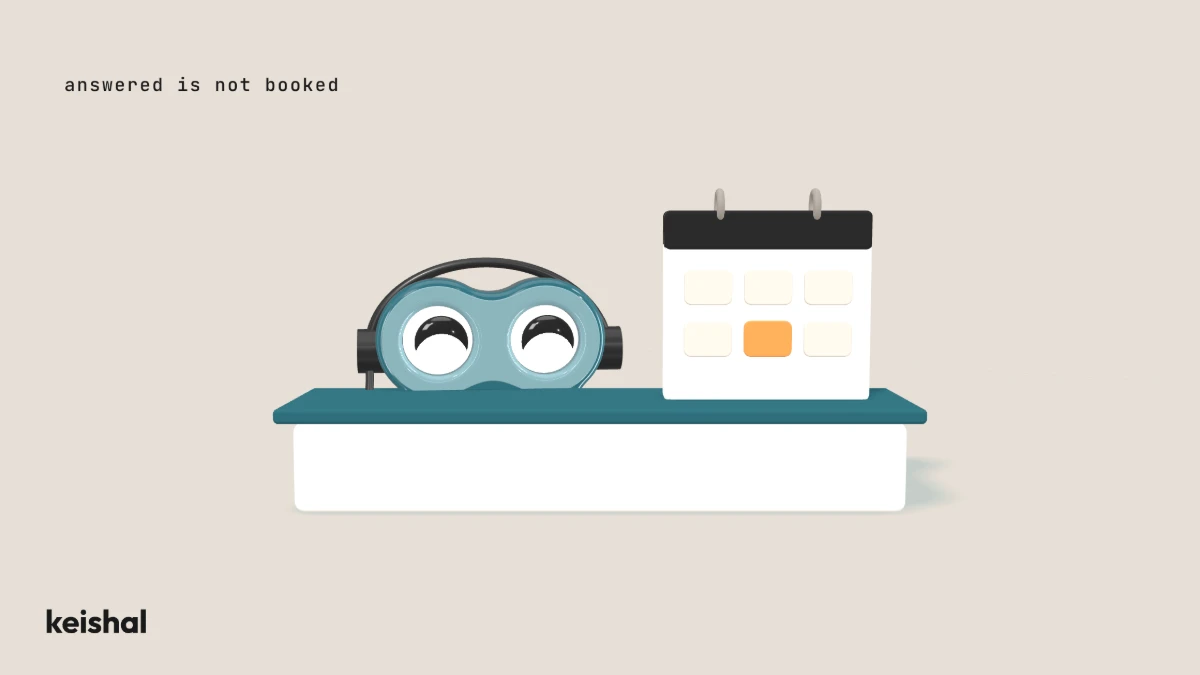
Booking is closed, not suggested. When the patient wants to come in, they get a booking path that ends in a confirmed slot. In Keishal's case, the conversation happens on WhatsApp and the patient picks the time in a calendar link that shows the clinic's real availability.
The outcome is written back. The appointment, the "not interested" and the "stop messaging me" all go back into the PMS. Next month's list starts from the truth.
Someone is accountable for it. A named owner, a monthly report of contacts, replies and bookings, and a decision about who to contact next. Without that, even good software drifts back to one blast a quarter.
Two things sit underneath all five. Patient data is sensitive, so it is handled under a written data processing agreement and stored in the EU. And when the conversation is run by AI, patients are told they are talking to an AI assistant, in line with the EU AI Act's transparency requirements. Done well, both are part of why patients trust the messages.
Questions to ask any dental recall software vendor
Whether you are buying for a clinic or assessing a company in this space, these questions separate a feature from a working process:
- Who reads and answers the replies, and when? If the answer is "your team", count the hours using the arithmetic above.
- What happens to patients who don't answer the first message? Is there a follow-up, at what interval, and when does it stop?
- How does a "yes" become a booked appointment? Is the slot real and confirmed, or is it a request someone has to process?
- Is the outcome written back to the PMS automatically? Which systems does it connect to today, not on the roadmap?
- Which suppression rules run before every send?
- Who is accountable for results, and what does the monthly report show?
Where Keishal fits
Keishal is an autonomous system that operates this workflow for dental clinics: suppression, the WhatsApp conversation, the booking and the write-back, on top of the clinic's existing PMS. In Spain it connects today to the practice systems on our integration list, such as Gesden, Nubimed, Dentalink and Clinic Cloud by Doctoralia. We serve clinics in Spain. We are researching Portugal, and we don't serve clinics there yet.
For investors and partners, the takeaway is structural. Recall has been sold as a software feature for years, and the list has existed all along. What has been missing is the hours to work it every day.
Sources: Consejo General de Dentistas de España, Libro Blanco de la Salud Oral en España (2020); Ordem dos Médicos Dentistas, Barómetro da Saúde Oral 2025 (10th edition, November 2025, n = 1,200). Workload and value figures are illustrative arithmetic, not Keishal results. Integration list as of November 2026.
What a dental AI receptionist actually does: the work, the hand-offs and who operates it
A dental AI receptionist handles a practice's routine patient communication: questions, booking, reminders, cancelled slots, lapsed patients and reviews. It runs those tasks end to end only if it writes outcomes back to the practice system; clinical questions, complaints and requests for a person go to the team. For one illustrative clinic the routine load is 17.5 hours a month. What decides whether it works is who operates it after installation.
Dental appointment reminders: what a no-show costs and what the reminder actually recovers
A dental appointment reminder tells the patient the slot exists. It recovers nothing on its own: a no-show costs the slot's value minus what gets refilled, and only a confirmation the patient can answer in one tap, plus a refill within hours, moves that number. In an illustrative 2-surgery diary, 15 no-shows and 11 late cancellations a month cost about €2,700, two thirds of it in the column nobody can refill.