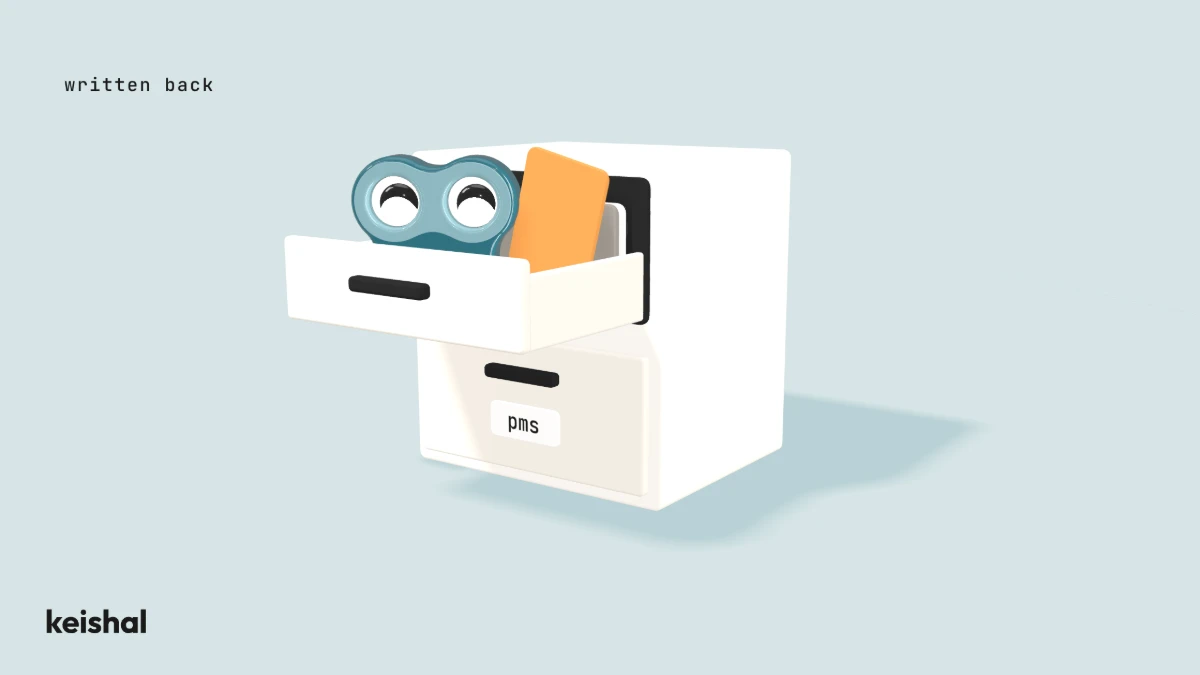
Dental practice management software integration, for a system that talks to patients, means two directions: read the practice system for context (agenda, contact details, last visit, do-not-contact flags) and write the outcome back (appointments, statuses, documents). Without write-back, every outcome is re-keyed by hand: 150 changes a month at 2 minutes is 5 hours in an illustrative clinic. In a fragmented PMS market like Spain's, the answer is a modular connector layer, not one deep integration.
Dental practice management software integration, for a system that talks to patients, comes down to two directions. It reads the practice management system (PMS) for the context a conversation needs: who the patient is, when they last came, which slots are free. And it writes the outcome back: the appointment, the confirmation, the cancellation, the status change. Reading without writing back gives you a chatbot that leaves work behind for the front desk. Writing back is what turns a conversation into an operated task.
I lead operations and product at Keishal. We operate patient communication in WhatsApp for dental clinics in Spain, on top of the practice system each clinic already has. This piece is written for the people on the other side of that connection: PMS vendors, integration partners and anyone judging whether a company understands the operational side of a dental practice. It covers what an integration reads, what it writes, what breaks without write-back, and why a fragmented PMS market needs a modular connector layer rather than one deep integration.
Why write-back is the line between a chatbot and an operated system
A patient messages the clinic at 22:40 to move tomorrow's 10:00 cleaning. A system that only reads the agenda can answer politely and show the free slots, and the patient picks Thursday at 17:30. If nothing is written back, the morning starts with a note for the front desk: cancel the 10:00, book Thursday, check nobody took that slot overnight. The conversation happened. The work didn't.
A system that writes back finishes the task. The 10:00 is released, the Thursday appointment is in the agenda, and the freed slot can be offered to someone else. The front desk sees a result, not a to-do list.
That difference is why we treat write-back as the condition for calling anything "operated". In our breakdown of what a dental AI receptionist actually does, every task an agent can run end to end depends on it. Without it, the same tasks become messages that a person still has to process.
What a dental PMS integration reads, and what it writes back
The useful way to scope an integration is task by task. Each patient-communication task needs a few things from the practice system and leaves one or two things behind. This is how it maps for the tasks Keishal runs:
| Task | Reads from the PMS | Writes back |
|---|---|---|
| Reminders and confirmations | Upcoming appointments, the treatment and the dentist | Confirmed, rescheduled or cancelled |
| 24/7 booking | Live availability | The appointment the patient picked |
| Cancelled slots | The cancellation, the waiting list, later appointments | The new appointment for whoever accepts |
| Reactivation | Last visit, contact details, do-not-contact flags | The appointment when the patient books |
| Digital consent | The appointment type | The signed document, linked to the patient |
| Review requests | Completed appointments | Nothing in the clinical record |
Two things stand out. First, reading is narrow: agenda, contact details, last visit, a few flags. Second, the writes are all operational. They are appointments, statuses and documents, never a diagnosis or a treatment note.
Booking is worth one precise line, because it is often described wrongly. The patient asks their questions in WhatsApp. When they are ready, they get a calendar link, see the free slots and pick one themselves. The confirmed appointment is then written into the clinic's agenda. The integration has to read availability live for that link to be true, and write the booking back for the slot to be gone.
Does the AI need full access to the patient record?
No task in the table needs the clinical history. A reminder needs the appointment. Reactivation needs the last visit and the flags that say who must not be contacted. Consent needs the appointment type. The principle we work to is "read for context": read what the conversation needs, not everything the practice system holds.
That principle also keeps the data roles clean. The clinic is the data controller of its patients' data and decides who is contacted and why. Keishal works as a data processor under Article 28 of the GDPR, with a written data processing agreement with every clinic, and patient data stored in the EU. How a specific integration should be documented is a question for the clinic's data protection adviser, not for us. One more duty sits in the conversation rather than in the connector: since 2 August 2026, Article 50 of the EU AI Act has asked that people be told they are interacting with an AI system, at the latest at the first interaction.
For a partner, the practical test is simple. Ask any vendor for its field list: what it reads, for which task, and what it writes. A vendor that can't produce one hasn't scoped its integration.
What breaks without write-back
When outcomes stay in the messaging tool, three things go wrong, in roughly this order.
Manual re-keying. Every outcome has to be copied into the agenda by hand. Take an illustrative clinic with 500 appointments a month. Assume 1 in 5 reminders gets a reply that changes the agenda, 30 new bookings arrive through WhatsApp and 20 cancelled slots are refilled. Assume 2 minutes per change to find the patient and update the agenda.
- 500 ÷ 5 = 100 reschedules and cancellations
- 100 + 30 + 20 = 150 changes a month
- 150 × 2 minutes = 300 minutes, or 5 hours a month
Five hours is the visible cost. If 1 in 50 of those changes is late or wrong, that is 3 a month: a patient who arrives for a slot that no longer exists, or a slot that looks taken and isn't. These are assumptions, not measurements. Put your own volumes into the same formula.
Double-booking and dead slots. Re-keying happens when someone has time, usually the next morning. A cancellation that arrives at 21:00 and is entered at 09:30 keeps its slot locked for 12.5 hours, which is exactly when it could have been refilled. The reverse is worse. A slot booked in the chat but not yet in the agenda can be given away at the desk. Our piece on what a no-show costs and what the reminder actually recovers shows why the refill window decides most of the value.
Stale lists. A patient who came back through a reactivation campaign is still "dormant" in a list nobody updated, so the next campaign contacts them again. A patient who said "stop" in WhatsApp is contacted for the same purpose the next month, because the opt-out lives only in a chat history. We describe how recall lists drift in why dental recall fails, even with recall software, and the opt-out side in AI disclosure for dental patients. Both problems disappear when the outcome lands where the next list is built.
Does integrating mean migrating?
No. The practice system stays the record. The integration reads patient data for context and writes appointments and statuses back. There is no migration, no copy of the patient database kept as a second source of truth, and no replacement of the PMS.
For a PMS vendor, that is the point that matters. A patient-communication layer built this way adds activity inside your system rather than pulling the clinic's work out of it. The appointments it creates are your appointments.
Why a fragmented PMS market needs a modular connector layer
Where a few practice systems cover most clinics, one deep integration can reach a large share of the market. In Spain, the practice-system layer is fragmented. The systems Keishal connects to in Spain today are Gesden G5, Gesden One, Nubimed, Mulhacén Soft, Cegid Ekon, Softgam, Odontonet, Vevi Clinic, Dentalink, Clinic Cloud by Doctoralia, Flowww, Cliniwin and Klinikare. That is thirteen systems for one country, and it is our integration list, not a census. We explained why that layer stays fragmented in our map of the dental software market in Spain.
In a market like that, one deep integration has a hard ceiling. Whatever the largest system's share, every clinic on any other system is out of reach. And each additional integration built as a one-off project multiplies the code that has to be maintained.
A modular connector layer answers that. The tasks are the same in every clinic: a reminder is a reminder, whichever system holds the appointment. What changes from one practice system to the next is how the connector reads the agenda and how it writes the outcome. Keeping that difference in the connector, and the tasks above it, is what lets a new system be added without rebuilding reminders, booking or reactivation for it.
What a practice system needs to expose
From the table above, a practice system that wants to support an operated patient-communication layer needs to make a short list available:
- The agenda: appointments, free slots, and which dentist each belongs to.
- Changes as they happen: a cancellation should be visible soon enough to refill the slot.
- The patient's contact details and the date of the last visit.
- Do-not-contact information: opt-outs and the flags the clinic uses for patients who have died or moved abroad.
- A way to write: create an appointment, change its status, and attach a document to the patient.
Not every practice system exposes all of this through a public API. When it doesn't, the work is a conversation between the integrator and that system, case by case. What should never happen is the clinic being asked to change its software so a messaging tool can work.
Questions partners should ask any integration
Whether you build a practice system or evaluate a vendor that connects to one, these are the questions we'd ask:
- What exactly do you read, and for which task? Ask for the field list.
- What do you write back? Appointments, statuses, documents. If the answer is "nothing", the front desk is the integration.
- How quickly does a change reach the agenda? Minutes or the next morning decides whether a cancelled slot can be refilled.
- Where does an opt-out go? It has to land somewhere the next campaign reads.
- What happens when the connection fails? Who notices, and what happens to conversations in the meantime?
- Who operates the tasks after go-live? An integration that works but that nobody runs produces nothing.
Where Keishal fits
Keishal is an autonomous system that operates patient communication for dental clinics in WhatsApp: questions, booking, reminders, cancelled slots, reactivation, reviews and consent. It reads the practice system for context and writes appointments and statuses back, with no migration and no replacement. The systems it connects to today are listed on our integrations page. The connector layer is modular, so a clinic or a vendor whose system isn't on the list can ask.
We serve clinics in Spain, and we are researching Portugal. If you build or sell practice software and want to see what the integration looks like from the conversation side, book a demo.
Article 50 date: Regulation (EU) 2024/1689 (AI Act), Art. 50 and Art. 113. Integration list and product description as of November 2026. Workload figures are illustrative arithmetic on stated assumptions, not Keishal results. Nothing here is legal advice.
WhatsApp for dental clinics: everyone is on it, almost nobody books through it
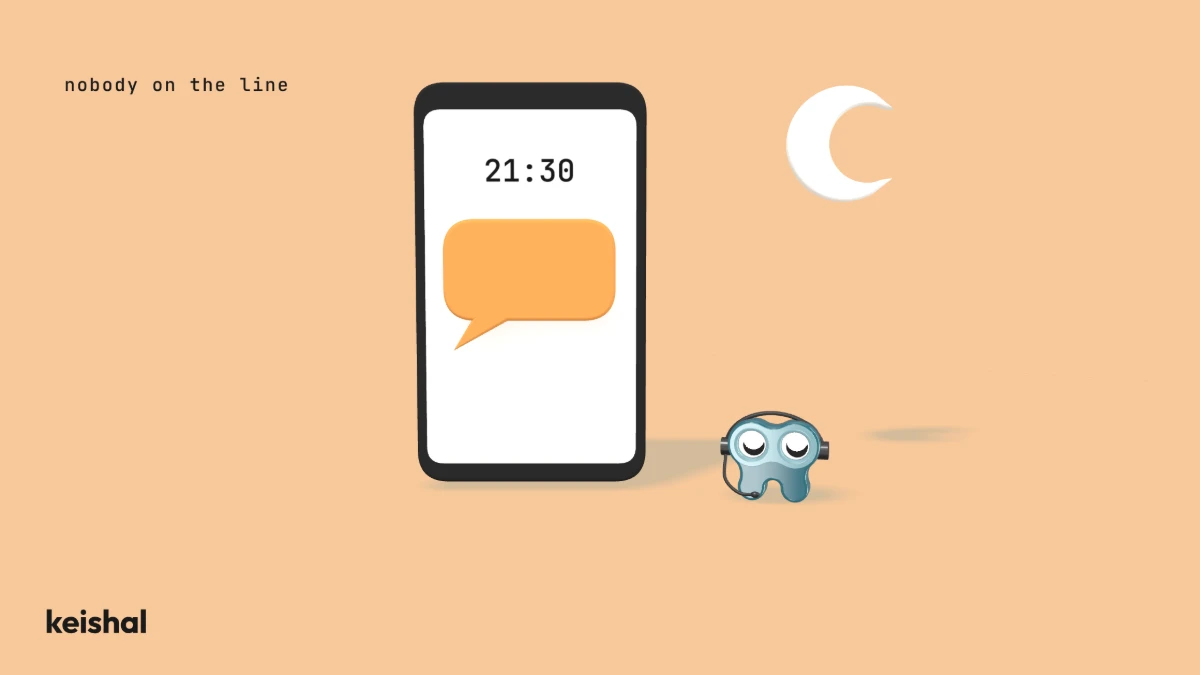
WhatsApp for dental clinics in southern Europe has reach but little use. In Portugal, 79% of online adults used WhatsApp in the past week (Reuters Institute, 2026), yet 65.3% of patients book by phone and only 1.8% book online through social networks, WhatsApp or a website (OMD Barómetro 2025). The bottleneck is who operates the line: usually one person, in office hours, about 32% of the week.
AI disclosure for dental patients: the first message, the opt-out and the hand-off
AI disclosure for dental patients happens in three moments: the first message says the patient is writing to an AI assistant, a patient who asks for a person gets one, and opted-out patients are suppressed before any outreach. Article 50 of the EU AI Act, applying since 2 August 2026, asks that people be told they are interacting with an AI at the latest at the first interaction. How a practice and its vendor split that duty is a question for the practice's data protection adviser.